




Pterygium
- Op. Dr. Osman Şenbilgin
- Last updated:
- 4 min read
- Medically reviewed by Op. Dr. Deniz Oygar Baylançiçek
What is Pterygium?
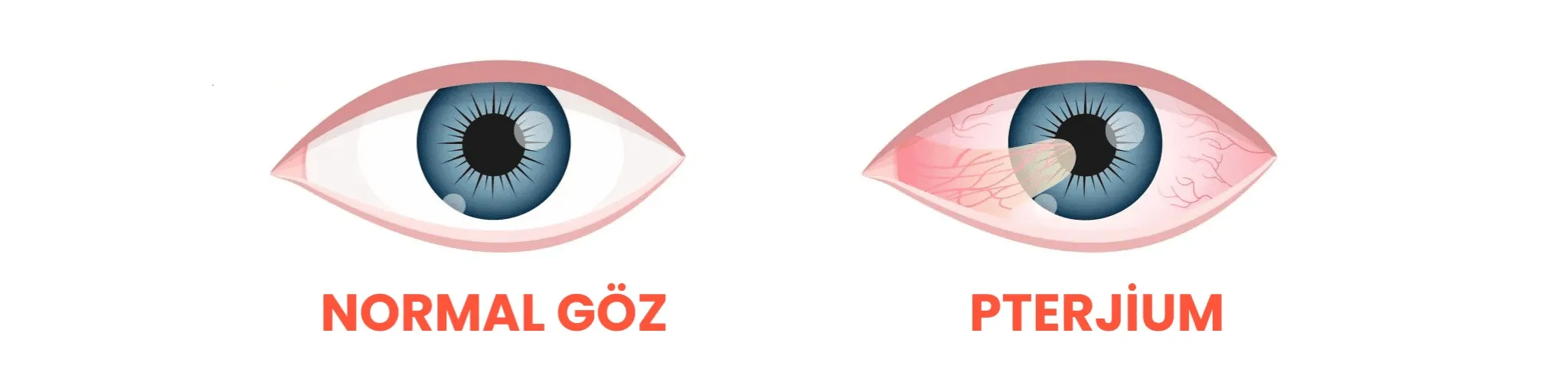
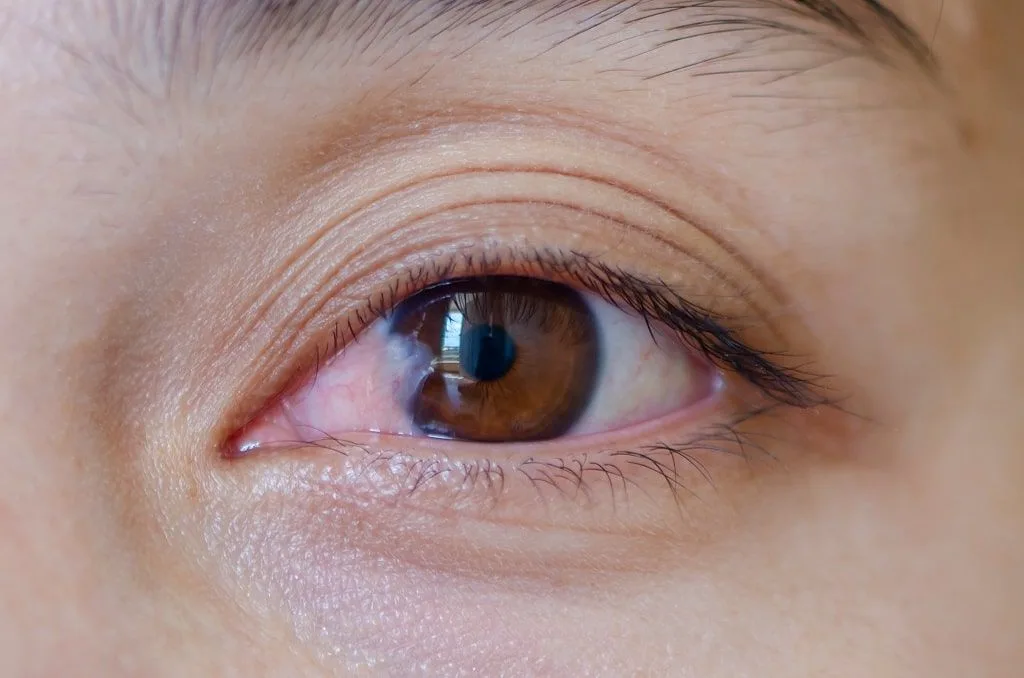
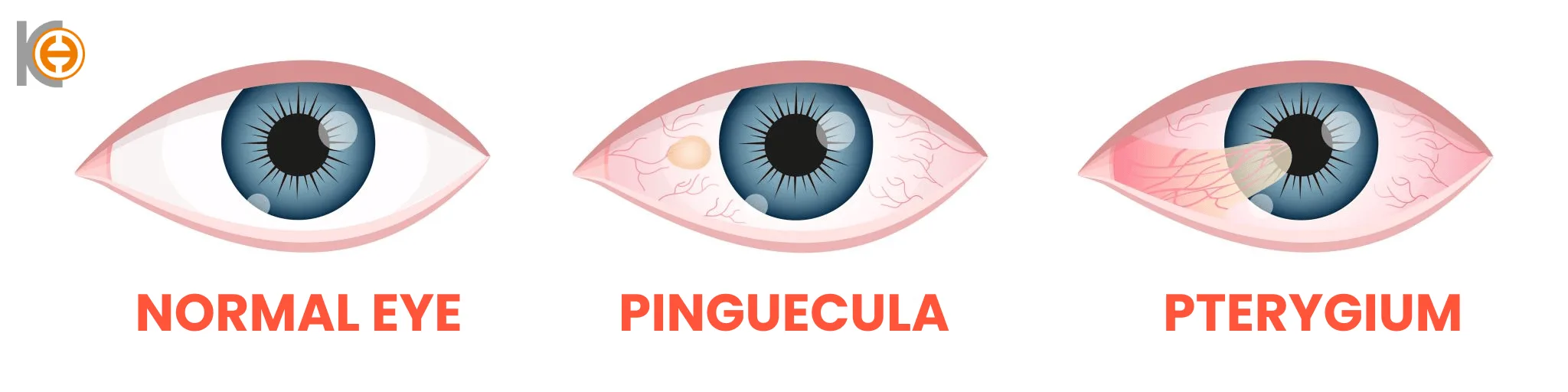
Pterygium is a common problem related to eye health. So, what is pterygium and how does it occur? Pterygium is a tissue that extends from the conjunctiva to the cornea, the transparent layer of the eye. Conjunctiva is a thin membrane layer consisting of vessels covering the surface of our eye like our skin. It is formed by thickening of a thin membrane called conjunctiva that covers the surface of our eye. Just as our skin thickens and calluses form when shoes hit our feet, pterygium is the thickening of the skin layer of our eyes due to external factors. Pterygium usually starts with a hillock on the surface of the eye formed by a yellowish-white, sun-related (UV) change in the conjunctival tissue called pinguecula. It is usually seen in the 3 and 9 o'clock quadrants of the eye.
What are the Symptoms of Pterygium?
- Redness of the eye
- Stinging or burning sensation in the eye
- Dry eye
- Blurred vision (in advanced cases)
- Aesthetically unpleasant appearance
What are the Causes of Pterygium?
Pterygium occurs as a result of contact of the eye surface with external factors. Exposure to sunlight, i.e. ultraviolet light, is the most important cause, as well as stimulating factors such as constant dustiness of the working environment or the presence of chemical substances, wind. Pterygium is a more common disease, especially in people living in hot climatic regions.
Is Pterygium Contagious? Can it be passed to other people?
Pterygium is a degenerative disease and is not infectious. Therefore, it does not show a contagious course.
How Does Pterygium Progress?
Pterygium causes symptoms that vary according to the degree of progression on the corneal surface. Among these, stinging, burning, watering, redness are the most common findings. In more advanced patients, the corneal surface may cause astigmatic changes and loss of vision as the corneal surface is covered with pterygium.
What will you feel during pterygium operation?
- The operation is performed with local anaesthesia without putting the patient to sleep.
- You may feel light touches after the numbing medicine is administered to your eye.
- The operation takes about 20-30 minutes, during which you should lie still and flat.
What awaits you after pterygium operation?
- Although it is a low probability, pterygium may recur.
- You can return to daily life in about a week. Redness, stinging and burning may continue in the early period, and full recovery can take up to a month.
- You will need to use drops temporarily.
How to prevent pterygium formation?
Sun protection starts in childhood. The use of hats and sunglasses provide effective protection against UV rays. It is necessary not to stay in dusty, windy environments for long periods. Smoking should be avoided, and people should not be in smoking areas. Especially operated patients should pay attention to these prevention methods.
When and How to Operate Pterygium
Pterygium surgery is performed if it causes significant discomfort in the eye (such as redness, stinging, watering), if it causes visual impairment, if it creates a risk that may endanger vision by progressing towards the pupil, if it creates a defect that disturbs the patient in terms of aesthetics and in other cases of medical necessity. Pterygium tissue is removed by cutting over the cornea and the remaining part of the membrane called conjunctiva is closed with sutures. In order to prevent recurrence, the conjunctiva can be folded under itself, the direction of the conjunctiva can be changed, a piece of conjunctiva can be taken from another part of the conjunctiva and sewn to that area, various drugs (antimetabolites) can be used, amniotic membrane transplantation can be performed.
Complications that may occur if the treatment is not accepted
If left untreated, pterygium tissue can progress and cover the cornea, leading to severe loss of vision. When treated at this advanced stage, there is a possibility of a white spot.
Risks and Possible Side Effects
Pterygium surgery is a short, low-risk procedure. Most possible side effects are temporary:
- Redness, grittiness and watering: common in the first weeks and settle with drops.
- Temporarily blurred vision: may occur in the first days and clears as the eye heals.
- Regrowth (recurrence): modern surgical techniques reduce this considerably; sun protection and check-ups matter, and it can be treated again if needed.
- Infection: very rare; it is prevented with the drops prescribed after surgery and simple hygiene measures.
What is the price of pterygium surgery?
The price of pterygium surgery varies depending on the underlying cause and the operation to be performed. The treatment plan to be created by our specialist ophthalmologist depending on the detailed examination results may vary from person to person.
Why choose Kudret Eye İstanbul for your procedure?
Over 24 years in eye care: three eye hospitals and a general hospital, a team of specialist surgeons and technology renewed every year.
Over 24 years of experience
Hundreds of thousands of successful operations and a name trusted across generations.
The latest technology
World-leading equipment for SMILE PRO, iLASIK and trifocal lenses.
Specialist surgeons
Every treatment is performed by a surgeon who specialises in it.
Lifetime aftercare
Follow-up checks and, if ever needed, enhancement are our responsibility.
About Treatment
Operation Duration
20-30 Minutes
Recovery Time
Back to daily life in about a week, full recovery in up to a month
Anaesthesia Type
Local Anesthesia
Frequently Asked Questions
Can pterygium cause vision loss?
Can pterygium reoccur?
What can be done to prevent pterygium?
Patient Reviews
Outstanding care from start to finish. The team ensured I was fully briefed before and upon my arrival, and I felt reassured throughout the entire procedure. Jem, Dr Mehmet Ali Ozdil and Zuhal delivered exceptional service and made me feel completely at ease during my Femto‑LASIK surgery. Note, following their simple aftercare instructions is also key to recovery.

They made the process of coming to a country where I don’t speak the language and having eye surgery (frightening enough in your home town) very easy indeed. I had a wonderful interpreter with me through the entire process every day, she made everything so easy. First class facilities, first class staff and a very convenient location.
A very kind and professional medical team! The surgery was completely straightforward and was completed relatively quickly. The entire team, and especially Zuhal, my patient coordinator, was always available, incredibly helpful, and genuinely pleasant throughout the whole process. She stayed by my side from start to finish, explained everything thoroughly, and always made sure I understood what was happening. The doctor worked in a very calm and professional manner, and I never felt uncertain or uncomfortable at any point. There were three fresh meals each day: breakfast, lunch, and dinner, and they were all very enjoyable. The hospital rooms were also very clean and well maintained. Overall, I had a very positive experience with this hospital. I’m truly grateful to the entire team and would wholeheartedly recommend this hospital to anyone.
Hello, so I went to Optical Express in UK but they quoted me an insanely high price for LASIK Surgery. After conducting research on multiple different hospitals and eye surgery places in Turkey. I settled on Kudret Goz. Throughout the entire period they were helpful in answering all my questions and very supportive. They have very experienced doctors who perform LASIK surgery multiple times a day for 20 years plus using the latest Johnson and Johnson technology. As soon as I landed at the airport they picked me up, dropped me at the hospital where I had my own comfortable room. They provided breakfast, lunch and dinner. In the morning they conducted tests to check my vision and if I’m feasible for the surgery, the same evening the surgery happened. I was nervous but It lasted 5 - 10 minutes and rested in my room that evening taking eye drops and disinfect eye drops every hour. The next day I woke up and my vision had become incredibly better, with every passing hour it got better and better. Within 24 hours my vision was incredibly clear and I was amazed. Thank you for operating the surgery and truly providing a life changing experience. For the price and quality of service Kudret Goz is unrivalled.
I have just returned from having Lens transplantation at Kudret Eye Hospital Istanbul. I was a lone traveller who was terrified at the prospect of eye surgery even having done my research. I have to say ALL the staff at Kudret were absolutely amazing. From 1st contacting them the communication was excellent no question was too much and always received a very prompt response. I was met at the airport in the middle of the night and taken straight to the hospital, was shown to my room. I felt very safe. I had numerous test the following day and then a consultation with the Doctor who advised me of my best implants. There was always someone with me who was able to translate anything said. I had my 1st op that afternoon again I felt safe and very confident with the professionalism of all the staff. Surgery took approximately 20 mins. I had no pain and the next day was able to see near intermediate and distance although not 100% but without glasses. After further checks I then went in for my second surgery. Again all went smoothly. The following day sight had improved even more in my 1st eye and then on removal of my eye patch my 2nd eye sight was great. I am thrilled to be glasses free and my vision improves every day. I was told it can take between 1 -3 weeks for the full result. I was given eye drops for home and full care instructions. I am very grateful to all those involved in my journey Thank you.
I visited OE in the UK, which quoted £5,500 for a LASIK surgery on both my eyes. As a result, I subsequently contacted Kudret Goz Istanbul via WhatsApp, and I must say I was very impressed by the level and quality of service. The initial contact person, Cem, was very helpful and explained the process, cost (much more reasonable than the UK clinic), and aftercare procedures very clearly. The doctor that I was assigned was Dr Nail Sönmez, who was very experienced and conducted a very effective iLASIK surgery, which only lasted about 10-15 minutes, and led to a significant improvement in my vision. He was also very transparent about the associated risks involved after the operation and advised how those could be mitigated after the surgery. Although the doctor and Cem spoke English, I was also assigned a translator, Zuhal, who was very friendly and helped me communicate with other hospital staff when needed. Therefore, I highly recommend Kudret Goz Istanbul for any UK resident seeking high-quality LASIK eye surgery at an affordable price.
My wife and I both had lens replacement here due to both having cataracts. I have to say from start to finish the whole experience was excellent. Careing helpful staff took care of all our needs and queries. Experienced expert surgeon did the operations on both eyes which only takes around 10 to 15 minutes and is completely painless. Excellent aftercare after the operations. Excellent value especially compared to the UK. For the two of us we paid plot less than one operation would cost in the UK. In particular I would like to thank Gem and Zuhan, both of whom speak English, for their care and attention also i would like to thank Dr Mehmet for his expertise. We have been home now for a month or so and our vision just keeps getting better and better as explained. I have no hesitation in recommding this excellent hospital. Thanks for our new eyes.
My sister and I recently traveled from London to Istanbul for laser eye operations, and I cannot rave enough about the exceptional care we received at Kudret Göz. Despite arriving at 4:30 AM, our pre-booked transport was seamlessly ready, whisking us directly to the hospital. From the moment we stepped through the doors, the warm welcome and hospitality made us feel instantly at ease. We were promptly shown to our rooms, and the staff's genuine kindness and attentiveness completely calmed any pre-operation jitters. They truly went above and beyond to ensure we felt relaxed and comfortable throughout the entire process. Beyond the outstanding medical care, the hospital's location is a huge bonus. Theres a massive mall called the Nautilus less than a 5 minute walk away from the hospital. It has amazing food spots along with some familiar ones. Overall, I'm beyond delighted with my experience at Kudret Göz. I was truly astounded by the immense effort they put in to ensure such a seamless and positive visit, all at an incredibly fair price!!
As someone who doesn't write reviews, I feel that this is an important opportunity to reach out to others. I was full of doubts , insecurity and skepticism about this procedure. I bought into all the negatives and downsides of lens replacement surgery , Whilst doing my research . After speaking to Jem , who put no pressure on me to sell me this . I trusted and respected him . There are many places in Turkey ( Medical tourism). , who are pushy , and run clinics offering , Hair , teeth , eyes ect. Kudret goz is a eye hospital that specializes in just eyes. I did arrive nervous, But saw how professional they are. The staff were super and so friendly, From the cleaners , security, receptionists and doctors . The place was spotless and I was comfortable, even 3 hospital meals per day. I'm amazed that my results are immediate. I can see perfectly 20/20 vision both eyes . No halos . Minimal irritation in eyes after op for an hour or 2. I'm amazed at how easy it is . I flew back to Bristol and drove back to South wales late at night . And my eyes at night were spot on . I'm delighted to not be wearing glasses anymore. Which Is given me freedom and a new confidence. I ride motorbikes and can't wait to get out on the bike 🏍. Looking forward to snooker , swimming and playing football. No glasses . My advice would be not to read to much ( scare mongering tactics) i would recommend this to everyone , family , friends and anyone who wants to listen . Best couple of grand I've ever spent . Update . 1 month on perfect vision . No problems.
Easy process to book appointment, clear communication throughout. The hospital I clean and well-equipped. The staff friendly and helpful. A translator on hand from the moment I arrived until I left The preparation and tests pror to the Yag laser procedure, faultless. Clear information given on each part if the process. The procedure was painless, and no ill effects and I could see clearly about 30 minutes after the procedure. I cannot recommend them enough .
I’m very happy I chose to have my LASIK procedure done at Kudret Göz in Istanbul. From the beginning, the communication was excellent. They speak very good English and were quick to respond to all my questions via text, which made the entire process much easier. On the day of the operation, everything moved efficiently and smoothly. I felt completely comfortable during each test and step of the procedure. The doctor also spoke excellent English and took the time to reassure me with all my questions. The rest of the staff were incredibly helpful and professional, and the clinic itself was very clean and well-organized. I would highly recommend Kudret Göz to anyone considering LASIK.
References
- 1.What Is a Pinguecula and a Pterygium (Surfer's Eye)? · AAO, 2026
- 2.Pterygium · EyeWiki (AAO), 2026
- 3.The Sun, UV Light and Your Eyes · AAO, 2026