



Kudret Eye IstanbulEye Diseases
Why Corneal Thickness Matters in Laser Surgery
For laser eye surgery to succeed, the cornea, the transparent front surface of the eye, has to be thick enough for the operation to proceed safely.…


Corneal treatments are performed by various methods in the field of eye health. These treatments include corneal transplantation, surgical procedures involving the replacement of corneal tissue, interventions to correct irregularities in the corneal surface, and various techniques used to treat corneal diseases.
The conjunctiva is a thin, transparent membrane that covers the white part of the eye (sclera) and the inside of the eyelids. It helps to moisturise the eye, protect it from infections and protect it from external factors. When the conjunctiva becomes inflamed, a condition called conjunctivitis occurs.
Microcornea is a condition in which the horizontal diameter of the cornea is less than 10 mm in a normal-sized eyeball. The cornea is a transparent dome at the front of the eye that refracts light and makes it possible to see clearly.
Keratitis is an inflammation of the transparent dome-shaped cornea layer in the front of the eye. The cornea is an important tissue layer that allows light to enter the eye and allows us to see clearly.
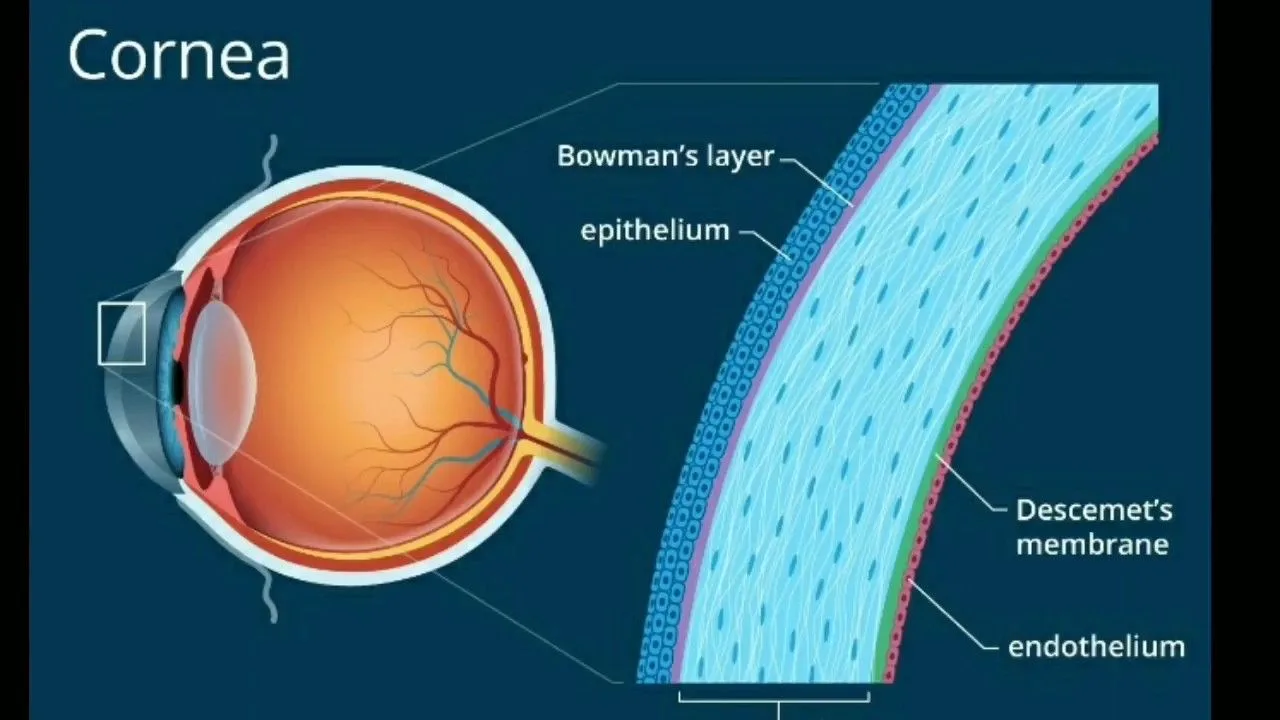
The cornea is a transparent dome-shaped organ in the front of the eye. It allows light to enter the eye and focus on the retina, enabling us to see clearly. The cornea not only allows light to pass through, but also helps to maintain the shape of the eye and protect it from infections.
Keratoconus affects the cornea, the transparent layer that forms the front of the eye. The cornea is important in terms of enabling us to see objects clearly and determining the degree of refraction of the eye. The cornea normally has a certain curvature, but in keratoconus patients this curvature gradually increases and the cornea hangs forward. Astigmatism occurs as a result of the increase in the forward curvature of the cornea in keratoconus patients. Since the astigmatism that occurs in keratoconus patients is not symmetrical in the entire cornea, it cannot be fully corrected with contact lenses or glasses, and the quality of life of the patients decreases and the quality of vision can be severely affected.
Corneal Ring Implantation is one of the most reliable treatment methods developed for keratoconus patients. In this treatment, small semicircular transparent rings are implanted into the cornea. Since these rings are placed in the eye by tunnelling with Femtosecond laser, it is completed in a very short time and the risk of complications during the procedure is very low. These rings are not noticeable from the outside and most importantly, they are not felt to be in the eye like contact lenses, so they are very comfortable for the patient. The rings, which can only be removed by a doctor at any time, do not leave any permanent scars that will affect vision because they are not placed in the visual centre.
Crosslinking is a treatment method for keratoconus in which UV-A light is applied to the cornea. No incision is made; only the surface layer is removed. In keratoconus patients, UV-A light is sent to the corneal layer, which is weak and sagging forward, for 10-30 minutes (depending on the protocol) after dropping riboflavin. After this treatment, the cross-links in the corneal layer are strengthened. In keratoconus patients who present with an increase in their glasses prescription, it is aimed to stop the increase after crosslinking.
Over 24 years in eye care: three eye hospitals and a general hospital, a team of specialist surgeons and technology renewed every year.
Hundreds of thousands of successful operations and a name trusted across generations.
World-leading equipment for SMILE PRO, iLASIK and trifocal lenses.
Every treatment is performed by a surgeon who specialises in it.
Follow-up checks and, if ever needed, enhancement are our responsibility.
They made the process of coming to a country where I don’t speak the language and having eye surgery (frightening enough in your home town) very easy indeed. I had a wonderful interpreter with me through the entire process every day, she made everything so easy. First class facilities, first class staff and a very convenient location.

A very kind and professional medical team! The surgery was completely straightforward and was completed relatively quickly. The entire team, and especially Zuhal, my patient coordinator, was always available, incredibly helpful, and genuinely pleasant throughout the whole process. She stayed by my side from start to finish, explained everything thoroughly, and always made sure I understood what was happening. The doctor worked in a very calm and professional manner, and I never felt uncertain or uncomfortable at any point. There were three fresh meals each day: breakfast, lunch, and dinner, and they were all very enjoyable. The hospital rooms were also very clean and well maintained. Overall, I had a very positive experience with this hospital. I’m truly grateful to the entire team and would wholeheartedly recommend this hospital to anyone.
Easy process to book appointment, clear communication throughout. The hospital I clean and well-equipped. The staff friendly and helpful. A translator on hand from the moment I arrived until I left The preparation and tests pror to the Yag laser procedure, faultless. Clear information given on each part if the process. The procedure was painless, and no ill effects and I could see clearly about 30 minutes after the procedure. I cannot recommend them enough .
For laser eye surgery to succeed, the cornea, the transparent front surface of the eye, has to be thick enough for the operation to proceed safely.…
Your cookie choice
Essential cookies are always on. With your permission we also use Google and Meta cookies for measurement and ads.Cookies needed for the site to work are always on. With your permission we also use Google and Meta cookies to measure visits and show you relevant ads. You can change your choice at any time with the "Cookie settings" link at the bottom of the page.Detailed Information