What is Monofocal Lens?
Monofocal lenses are one of the types of lenses placed in the eye during cataract surgery. Cataract is a condition in which the transparent lens in the eye becomes cloudy and loses its light permeability due to a number of reasons. This problem may occur due to many reasons. Excessive exposure to the sun, eye traumas, advancing age, exposure to toxic chemicals are among the most important causes. In addition to these, intensive cortisone medications and changes in body metabolism can also cause cataract formation. The most important treatment of this problem is surgery.
People can have better vision with cataract surgery performed by specialised and experienced doctors. Cataract becomes more common after the age of 55-60, and during cataract surgery a lens is placed in the eye. These lenses used to correct distance vision are called monofocal lenses.
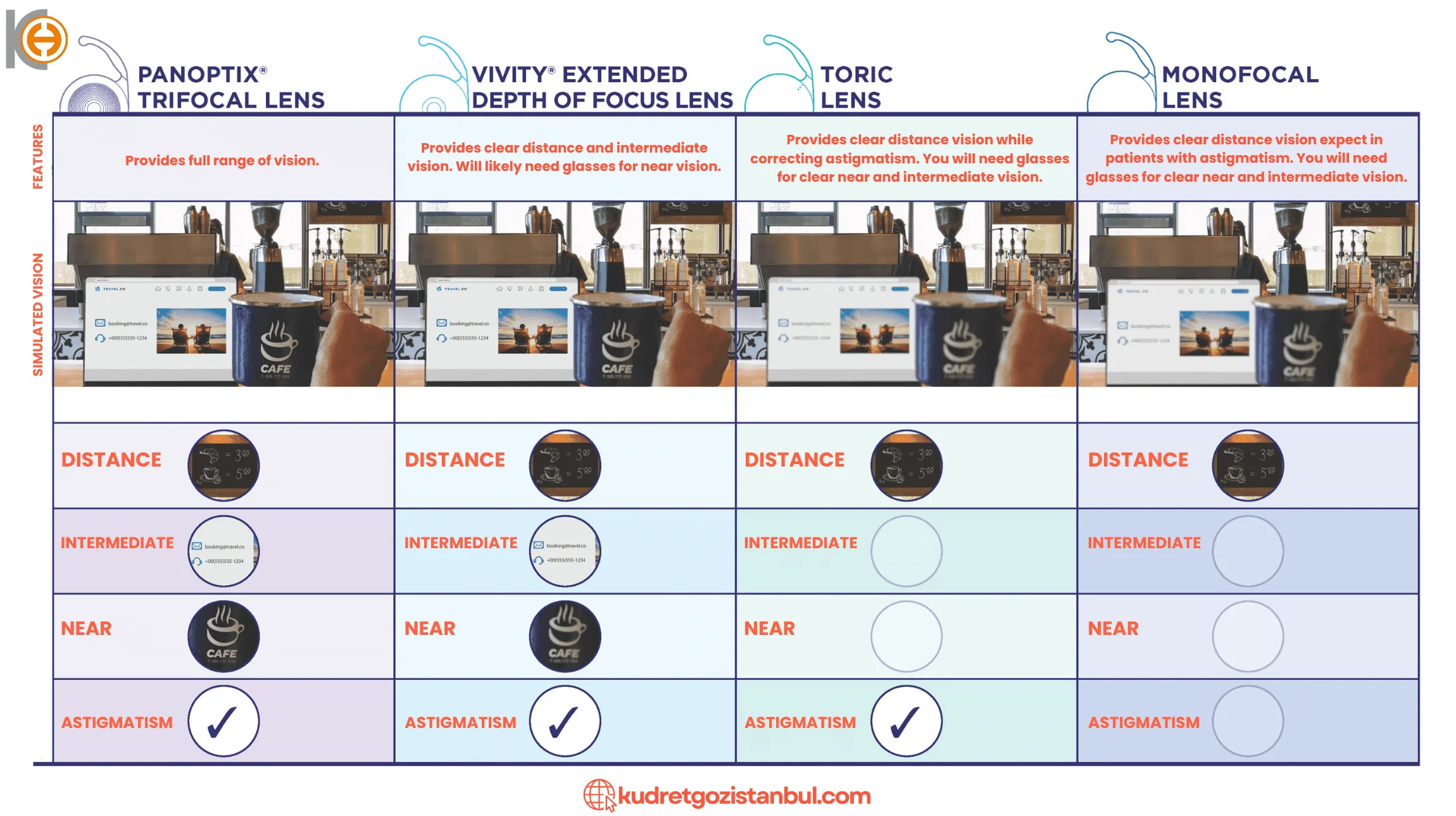
Monofocal lenses are lens types with a single focal point. These lenses are ideal for patients who have problems with distance vision. During cataract surgery, these lenses are placed instead of the natural lens, allowing the patient to see distant distances more clearly. Monofocal lens types are not lenses used to see objects at close distances clearly. Although there are intraocular lenses, they have a single focal point. They are the types of lenses commonly applied to people undergoing cataract surgery. Different options are also available. However, the most accurate lens selection is decided by the ophthalmologist.
How is Monofocal Lens Fitted?
Monofocal lenses are applied to the patient during cataract surgery. The natural lens is surgically removed and replaced with artificial lenses. Each of these lenses has different advantages. One of the commonly used intraocular lens types is monofocal lens types. The following details are important before and after fitting these lenses:
- Your general health and eye measurements are assessed.
- Problems in the eye are then determined.
- Aesthetic expectations of the patients are also taken into consideration.
- Then the type of treatment and lens type is decided.
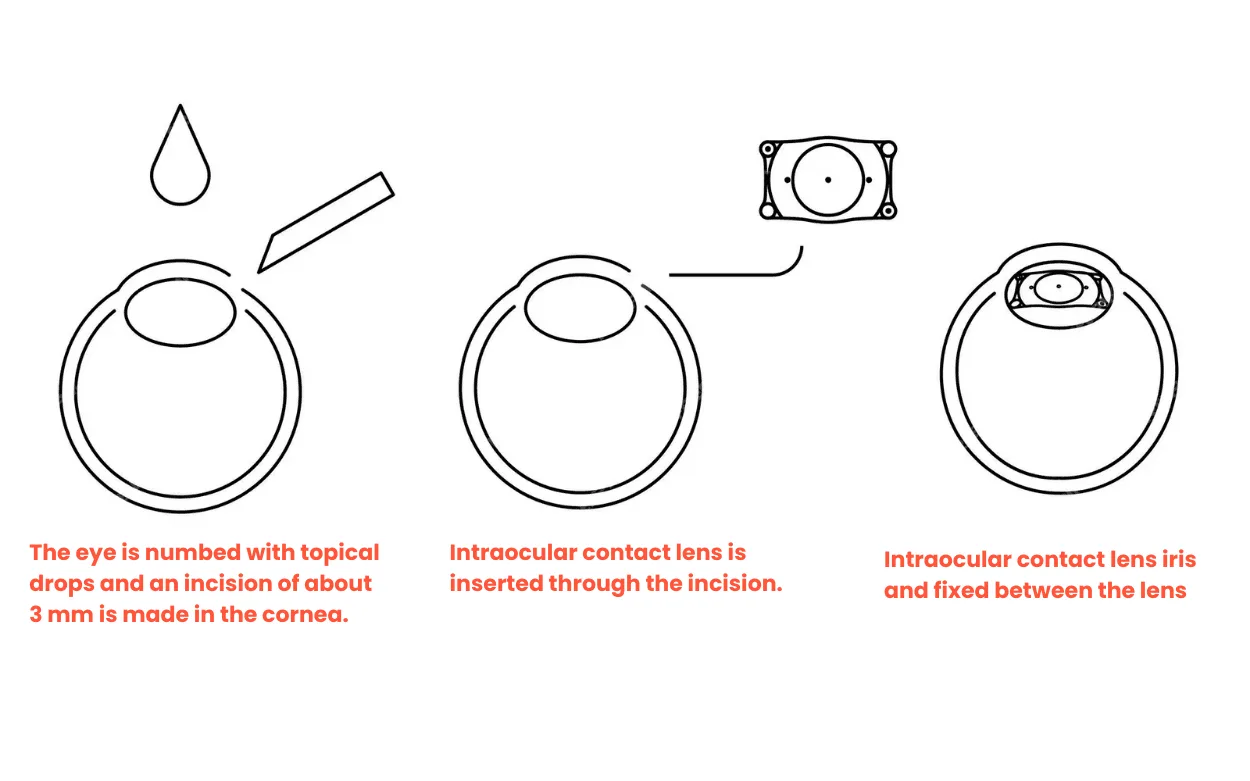
- Topical eye drops or local anaesthesia are used for the monofocal lens implantation procedure. It is a painless method.
- Then, the lenses are placed with the help of special injectors by using 2.2 mm incisions with the Phaco method.
Before and After Monofocal Lens Treatment
Before intraocular lenses are fitted, the patient's health condition is evaluated by the doctor. It is checked what kind of eye problem he/she has. It is extremely important that these operations are performed by experienced ophthalmologists. Since topical eye drops or local anaesthesia are applied during the procedure, the patient does not feel any pain during the procedure. The operation takes about 15-20 minutes per eye. After the treatment is completed, the treated eye of the patient should be kept closed overnight. Starting from the next day, the drops and medications given by the doctor should be used daily.
Who Are Monofocal Lenses Suitable For?
The lenses placed in the eye during cataract surgery to help people see more clearly at a distance are called monofocal lenses. They can also be used in lens exchange for people without cataracts. Because they correct conditions such as myopia and hyperopia, they help distant objects look sharper. Lenses of this type are generally used for patients aged 40 and over. They give the best vision at a single distance. Older people in particular may want to correct only their distance vision, and in such cases monofocal lenses are a very effective option.
What are the Benefits of Monofocal Lenses?
In order to improve the quality of vision, intraocular lenses are widely used today. The most important reason why these lenses are preferred is that they enable people to see more clearly. Since it has a single focal point, it is generally considered a simple and reliable option. It is a highly effective solution for correcting patients' vision at a distance. In addition, they are more economical lens types. It is presented to the patient as an easily accessible option in terms of surgery.
Since there is a single focal point, the patient's acclimatisation phase is easier and faster. As with all lenses, the fact that monofocal lenses can be used for a lifetime is one of the most important reasons why these lenses are preferred.
Risks and Possible Side Effects
Intraocular lens and cataract surgery are among the most commonly performed operations in the world, with a very high success rate. As with any surgical procedure there are some risks, but they are unlikely, and most can be treated if they do occur. Regular check-ups help to spot any problem early.
- Infection: very rare; antibiotic drops used before and after surgery keep this risk to a minimum.
- A temporary rise in eye pressure: usually in the first few days, and easily controlled with drops.
- Posterior capsule opacification: months or years later vision may become slightly cloudy; this is cleared with a quick, painless YAG laser treatment lasting 1-2 minutes.
- Temporary dryness, grittiness or redness: may occur in the first weeks and settles with drops.
- Retinal detachment: very rare; if you notice sudden flashes, new floaters or a shadow across your vision, contacting us straight away allows early treatment.
How Much Is Monofocal Lens Price?
Monofocal lens prices vary depending on the underlying cause, the type of lens and the operation to be performed. The treatment plan to be created by our specialist ophthalmologist depending on the detailed examination results may vary from person to person.
Read our article with the list of intraocular lens surgery 2026 prices.




 Türkçe
 English
 Deutsch
 Nederlands
 Italiano
 Español
 Français
 Български
 Română
 Русский
 العربية