



Kudret Eye IstanbulEye Treatments In Children
What Causes Lazy Eye (Amblyopia)?
Lazy eye (amblyopia) is reduced vision in one or both eyes because sight did not develop properly in childhood. This article explains its causes,…

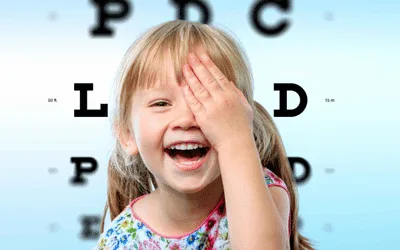
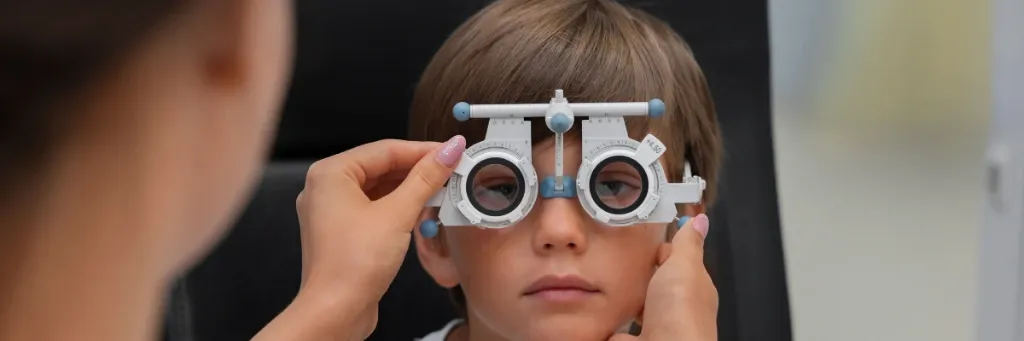
Early diagnosis and treatment of refractive errors in children is of great importance to improve both the quality of vision and the overall development of children. When vision problems are detected and treated at an early stage, children can respond faster to treatment and improve their quality of life. Since vision has a direct impact on children's learning skills, motor development and social interactions, any vision problem should be recognised in a timely manner. In this article, we will discuss the common eye problems encountered in children and infants and the basic symptoms that parents should pay attention to for early diagnosis of these problems. Since refractive errors in children and babies usually do not show concrete symptoms, children cannot express these problems. Children may show refractive errors with behaviours such as blinking excessively, frowning or rubbing their eyes constantly. Given such symptoms, regular eye examinations are extremely important. If refractive errors are not diagnosed early, children's eye health and general development can be adversely affected.
Cataracts in children and infants are a disease that results in clouding of the clear lens in the eye and can have a critical impact on visual development. Cataracts are usually congenital, but factors such as eye injuries, inflammation inside the eye or certain medicines can also trigger this condition. Early diagnosis of cataract in children is of great importance for the successful treatment process. Symptoms of cataract in children are usually manifested by blurred vision or hypersensitivity to light.
Red eye, one of the other common eye problems in children, can be a symptom of various eye infections in children. This disease causes redness and watering in the eye due to inflammation or infection of the eye, especially in infants and young children. Conditions that cause red eye in children can include bacterial or viral infections, allergic reactions or foreign bodies. When it is caused by an infection it can be contagious, so it should be seen to quickly once symptoms appear.
Strabismus in children and infants is the non-parallelism of the eyes as a result of the incompatibility of the eye muscles and can have negative effects on visual development. Strabismus can negatively affect children's attention and learning skills, which can make their learning process difficult. Symptoms of strabismus usually manifest themselves in the form of slippage in one or both eyes, double vision and difficulty in focusing. Successful results can be achieved when strabismus treatment is performed early.
Tear duct obstruction in infants and children is a condition that often occurs in newborns. This means that tears cannot flow normally and cause watery eyes. In most cases, this blockage resolves spontaneously within the first year after birth. However, massage applications or surgical intervention may also be required for cases that require treatment.
Although dry eye is usually associated with old age, children and babies can also be affected by this condition today. Especially excessive use of digital screens can cause dry eye in children. Dry eye is caused by a decrease in the quality of the tears that protect the surface of the eye and can lead to vision and comfort problems if left untreated. This condition can sometimes be quite difficult to recognise, but symptoms such as redness in children's eyes, discomfort with foreign objects and frequent rubbing of the eyes are important.
Lazy eye, also known as amblyopia, is a condition that can be diagnosed and treated early, especially in childhood. Amblyopia occurs when the clarity of vision decreases due to poorer vision in one eye or refractive errors in one eye more than the other. If not treated at an early age, vision loss can be permanent. If the eye health of children is not sufficiently taken into consideration during normal development processes, long-term problems such as lazy eye may develop. As a result, all these eye health problems in children and infants can be controlled to a great extent thanks to fast-responding treatment opportunities in the growing age. Regular eye examinations and expert support for early diagnosis both improve the quality of vision and ensure that children have a healthy development process.
The price of eye treatment for children varies depending on the underlying cause and the operation to be performed. The treatment plan that our specialist ophthalmologist will create after a detailed examination may vary from person to person.
Over 24 years in eye care: three eye hospitals and a general hospital, a team of specialist surgeons and technology renewed every year.
Hundreds of thousands of successful operations and a name trusted across generations.
World-leading equipment for SMILE PRO, iLASIK and trifocal lenses.
Every treatment is performed by a surgeon who specialises in it.
Follow-up checks and, if ever needed, enhancement are our responsibility.
They made the process of coming to a country where I don’t speak the language and having eye surgery (frightening enough in your home town) very easy indeed. I had a wonderful interpreter with me through the entire process every day, she made everything so easy. First class facilities, first class staff and a very convenient location.

A very kind and professional medical team! The surgery was completely straightforward and was completed relatively quickly. The entire team, and especially Zuhal, my patient coordinator, was always available, incredibly helpful, and genuinely pleasant throughout the whole process. She stayed by my side from start to finish, explained everything thoroughly, and always made sure I understood what was happening. The doctor worked in a very calm and professional manner, and I never felt uncertain or uncomfortable at any point. There were three fresh meals each day: breakfast, lunch, and dinner, and they were all very enjoyable. The hospital rooms were also very clean and well maintained. Overall, I had a very positive experience with this hospital. I’m truly grateful to the entire team and would wholeheartedly recommend this hospital to anyone.
Easy process to book appointment, clear communication throughout. The hospital I clean and well-equipped. The staff friendly and helpful. A translator on hand from the moment I arrived until I left The preparation and tests pror to the Yag laser procedure, faultless. Clear information given on each part if the process. The procedure was painless, and no ill effects and I could see clearly about 30 minutes after the procedure. I cannot recommend them enough .
Lazy eye (amblyopia) is reduced vision in one or both eyes because sight did not develop properly in childhood. This article explains its causes,…
Your cookie choice
Essential cookies are always on. With your permission we also use Google and Meta cookies for measurement and ads.Cookies needed for the site to work are always on. With your permission we also use Google and Meta cookies to measure visits and show you relevant ads. You can change your choice at any time with the "Cookie settings" link at the bottom of the page.Detailed Information