


 Türkçe
 English
 Deutsch
 Nederlands
 Italiano
 Español
 Français
 Български
 Română
 Русский
 العربية


Treatments
Crosslinking
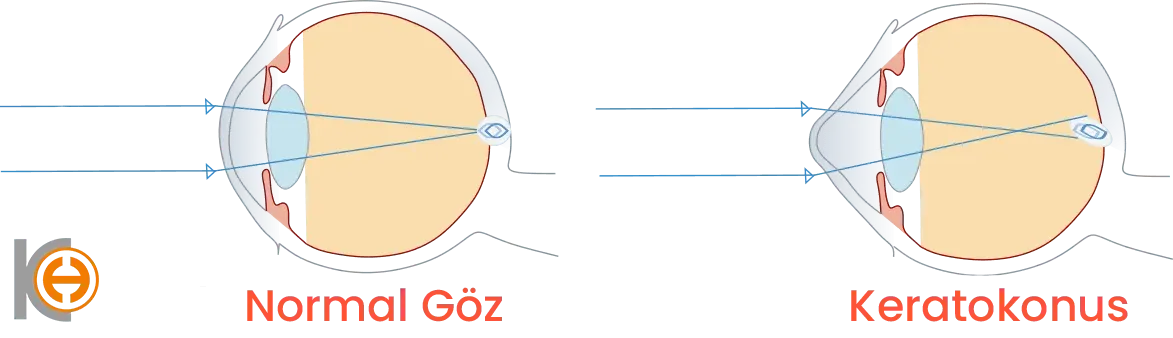
Crosslinking strengthens the corneal layer that weakens and bulges forward in keratoconus. Riboflavin drops are applied and UV-A light is delivered; no incision is made, only the surface layer is removed, and the aim is to stop the progression.
- Kudret Eye Istanbul
- Last updated:
- 3 min read
- Medically reviewed by Op. Dr. Mehmet Ali Özdil
What is Crosslinking Treatment?
In the treatment of keratoconus, crosslinking is a treatment method in which UV-A light is applied to the cornea. No incision is made; only the surface layer is removed. In keratoconus patients, UV-A light is sent to the corneal layer, which is weak and sagging forward, for 10-30 minutes (depending on the protocol) after dropping riboflavin. After this treatment, the cross-links in the corneal layer are strengthened. In keratoconus patients who present with an increase in their glasses prescription, it is aimed to stop the increase after crosslinking.
Can Crosslinking Treatment be applied together with Corneal Ring Implantation or Corneal Transplantation?
Yes, it can be applied. Crosslinking treatment can be applied before or after corneal ring implantation and after corneal transplantation.
How Much Is Crosslinking Treatment Price?
Crosslinking treatment prices vary according to the underlying cause, special examination and detailed measurements to be made to your eye depending on the operation to be performed. The treatment plan to be created by our specialist ophthalmologist depending on the detailed examination results may vary from person to person.
Who Is Crosslinking For?
Crosslinking is used in eyes where keratoconus has been shown to be progressing. Progression is established by comparing corneal topography measurements taken months apart; a single measurement does not show it. The condition usually advances during the teenage and young adult years, which is when treatment most often comes up.
Corneal thickness has to be above a certain limit for the procedure to be possible. A cornea that has thinned too far, an eye with an active infection, or a cornea that has lost its clarity may not be suitable. That assessment is made with the measurements taken before surgery.
How Is Crosslinking Performed?
The procedure is done under anaesthetic drops. You stay awake and no general anaesthetic is needed. Riboflavin, which is vitamin B2, is applied to the surface of the cornea; once the cornea has absorbed it, the eye is exposed to controlled ultraviolet light. Together, the light and the riboflavin create new bonds between the corneal fibres and the tissue stiffens.
The UV application takes 10-30 minutes per eye, depending on the protocol. A protective bandage contact lens is placed at the end and you go home the same day.
Recovery After Crosslinking
The first days are less comfortable than after other corneal procedures: stinging, light sensitivity and watering are expected. The bandage contact lens is removed by your surgeon once the surface has closed. Do not remove it yourself.
Vision can stay blurred through the first weeks and takes time to clear. Your drop schedule and check-up dates follow the timetable your surgeon gives you.
Does Crosslinking Improve Vision?
The aim of crosslinking is not to improve vision but to stop keratoconus from progressing. In some patients the shape of the cornea improves somewhat over time, but that is not the goal of the treatment and it does not happen in every eye.
For that reason glasses, contact lenses or an intracorneal ring may still be considered after crosslinking to correct vision. Which of those suits you is decided together with the measurements taken after surgery.
Risks and Possible Side Effects
Crosslinking is a low-risk treatment used to halt the progression of keratoconus. Most side effects are limited to the first few days:
- Stinging, watering and light sensitivity for the first 2-3 days: expected while the corneal surface heals, and eased by a bandage contact lens, drops and painkillers.
- Temporarily blurred vision or corneal haze: fades over weeks or months.
- Infection: very rare; following the drop and bandage lens instructions until the surface has healed keeps this to a minimum.
- Progression not halted: uncommon; if check-ups show continued progression, the treatment can be reconsidered.
Why choose Kudret Eye İstanbul for your procedure?
Over 24 years in eye care: three eye hospitals and a general hospital, a team of specialist surgeons and technology renewed every year.
Over 24 years of experience
Hundreds of thousands of successful operations and a name trusted across generations.
The latest technology
World-leading equipment for SMILE PRO, iLASIK and trifocal lenses.
Specialist surgeons
Every treatment is performed by a surgeon who specialises in it.
Lifetime aftercare
Follow-up checks and, if ever needed, enhancement are our responsibility.
Information pack
Request your free information pack
Choose the treatment you are curious about and open the guide covering the treatment, the process and the prices right away.
Frequently Asked Questions
Who is crosslinking suitable for?
How is crosslinking performed?
Is crosslinking painful?
Can the crosslinking procedure be repeated?
What should be considered after crosslinking?
Patient Reviews
Outstanding care from start to finish. The team ensured I was fully briefed before and upon my arrival, and I felt reassured throughout the entire procedure. Jem, Dr Mehmet Ali Ozdil and Zuhal delivered exceptional service and made me feel completely at ease during my Femto‑LASIK surgery. Note, following their simple aftercare instructions is also key to recovery.

They made the process of coming to a country where I don’t speak the language and having eye surgery (frightening enough in your home town) very easy indeed. I had a wonderful interpreter with me through the entire process every day, she made everything so easy. First class facilities, first class staff and a very convenient location.
A very kind and professional medical team! The surgery was completely straightforward and was completed relatively quickly. The entire team, and especially Zuhal, my patient coordinator, was always available, incredibly helpful, and genuinely pleasant throughout the whole process. She stayed by my side from start to finish, explained everything thoroughly, and always made sure I understood what was happening. The doctor worked in a very calm and professional manner, and I never felt uncertain or uncomfortable at any point. There were three fresh meals each day: breakfast, lunch, and dinner, and they were all very enjoyable. The hospital rooms were also very clean and well maintained. Overall, I had a very positive experience with this hospital. I’m truly grateful to the entire team and would wholeheartedly recommend this hospital to anyone.
Hello, so I went to Optical Express in UK but they quoted me an insanely high price for LASIK Surgery. After conducting research on multiple different hospitals and eye surgery places in Turkey. I settled on Kudret Goz. Throughout the entire period they were helpful in answering all my questions and very supportive. They have very experienced doctors who perform LASIK surgery multiple times a day for 20 years plus using the latest Johnson and Johnson technology. As soon as I landed at the airport they picked me up, dropped me at the hospital where I had my own comfortable room. They provided breakfast, lunch and dinner. In the morning they conducted tests to check my vision and if I’m feasible for the surgery, the same evening the surgery happened. I was nervous but It lasted 5 - 10 minutes and rested in my room that evening taking eye drops and disinfect eye drops every hour. The next day I woke up and my vision had become incredibly better, with every passing hour it got better and better. Within 24 hours my vision was incredibly clear and I was amazed. Thank you for operating the surgery and truly providing a life changing experience. For the price and quality of service Kudret Goz is unrivalled.
I have just returned from having Lens transplantation at Kudret Eye Hospital Istanbul. I was a lone traveller who was terrified at the prospect of eye surgery even having done my research. I have to say ALL the staff at Kudret were absolutely amazing. From 1st contacting them the communication was excellent no question was too much and always received a very prompt response. I was met at the airport in the middle of the night and taken straight to the hospital, was shown to my room. I felt very safe. I had numerous test the following day and then a consultation with the Doctor who advised me of my best implants. There was always someone with me who was able to translate anything said. I had my 1st op that afternoon again I felt safe and very confident with the professionalism of all the staff. Surgery took approximately 20 mins. I had no pain and the next day was able to see near intermediate and distance although not 100% but without glasses. After further checks I then went in for my second surgery. Again all went smoothly. The following day sight had improved even more in my 1st eye and then on removal of my eye patch my 2nd eye sight was great. I am thrilled to be glasses free and my vision improves every day. I was told it can take between 1 -3 weeks for the full result. I was given eye drops for home and full care instructions. I am very grateful to all those involved in my journey Thank you.
I visited OE in the UK, which quoted £5,500 for a LASIK surgery on both my eyes. As a result, I subsequently contacted Kudret Goz Istanbul via WhatsApp, and I must say I was very impressed by the level and quality of service. The initial contact person, Cem, was very helpful and explained the process, cost (much more reasonable than the UK clinic), and aftercare procedures very clearly. The doctor that I was assigned was Dr Nail Sönmez, who was very experienced and conducted a very effective iLASIK surgery, which only lasted about 10-15 minutes, and led to a significant improvement in my vision. He was also very transparent about the associated risks involved after the operation and advised how those could be mitigated after the surgery. Although the doctor and Cem spoke English, I was also assigned a translator, Zuhal, who was very friendly and helped me communicate with other hospital staff when needed. Therefore, I highly recommend Kudret Goz Istanbul for any UK resident seeking high-quality LASIK eye surgery at an affordable price.
My wife and I both had lens replacement here due to both having cataracts. I have to say from start to finish the whole experience was excellent. Careing helpful staff took care of all our needs and queries. Experienced expert surgeon did the operations on both eyes which only takes around 10 to 15 minutes and is completely painless. Excellent aftercare after the operations. Excellent value especially compared to the UK. For the two of us we paid plot less than one operation would cost in the UK. In particular I would like to thank Gem and Zuhan, both of whom speak English, for their care and attention also i would like to thank Dr Mehmet for his expertise. We have been home now for a month or so and our vision just keeps getting better and better as explained. I have no hesitation in recommding this excellent hospital. Thanks for our new eyes.
My sister and I recently traveled from London to Istanbul for laser eye operations, and I cannot rave enough about the exceptional care we received at Kudret Göz. Despite arriving at 4:30 AM, our pre-booked transport was seamlessly ready, whisking us directly to the hospital. From the moment we stepped through the doors, the warm welcome and hospitality made us feel instantly at ease. We were promptly shown to our rooms, and the staff's genuine kindness and attentiveness completely calmed any pre-operation jitters. They truly went above and beyond to ensure we felt relaxed and comfortable throughout the entire process. Beyond the outstanding medical care, the hospital's location is a huge bonus. Theres a massive mall called the Nautilus less than a 5 minute walk away from the hospital. It has amazing food spots along with some familiar ones. Overall, I'm beyond delighted with my experience at Kudret Göz. I was truly astounded by the immense effort they put in to ensure such a seamless and positive visit, all at an incredibly fair price!!
As someone who doesn't write reviews, I feel that this is an important opportunity to reach out to others. I was full of doubts , insecurity and skepticism about this procedure. I bought into all the negatives and downsides of lens replacement surgery , Whilst doing my research . After speaking to Jem , who put no pressure on me to sell me this . I trusted and respected him . There are many places in Turkey ( Medical tourism). , who are pushy , and run clinics offering , Hair , teeth , eyes ect. Kudret goz is a eye hospital that specializes in just eyes. I did arrive nervous, But saw how professional they are. The staff were super and so friendly, From the cleaners , security, receptionists and doctors . The place was spotless and I was comfortable, even 3 hospital meals per day. I'm amazed that my results are immediate. I can see perfectly 20/20 vision both eyes . No halos . Minimal irritation in eyes after op for an hour or 2. I'm amazed at how easy it is . I flew back to Bristol and drove back to South wales late at night . And my eyes at night were spot on . I'm delighted to not be wearing glasses anymore. Which Is given me freedom and a new confidence. I ride motorbikes and can't wait to get out on the bike 🏍. Looking forward to snooker , swimming and playing football. No glasses . My advice would be not to read to much ( scare mongering tactics) i would recommend this to everyone , family , friends and anyone who wants to listen . Best couple of grand I've ever spent . Update . 1 month on perfect vision . No problems.
Easy process to book appointment, clear communication throughout. The hospital I clean and well-equipped. The staff friendly and helpful. A translator on hand from the moment I arrived until I left The preparation and tests pror to the Yag laser procedure, faultless. Clear information given on each part if the process. The procedure was painless, and no ill effects and I could see clearly about 30 minutes after the procedure. I cannot recommend them enough .
I’m very happy I chose to have my LASIK procedure done at Kudret Göz in Istanbul. From the beginning, the communication was excellent. They speak very good English and were quick to respond to all my questions via text, which made the entire process much easier. On the day of the operation, everything moved efficiently and smoothly. I felt completely comfortable during each test and step of the procedure. The doctor also spoke excellent English and took the time to reassure me with all my questions. The rest of the staff were incredibly helpful and professional, and the clinic itself was very clean and well-organized. I would highly recommend Kudret Göz to anyone considering LASIK.
References
- 1.Photochemical corneal collagen cross-linkage using riboflavin and ultraviolet A for keratoconus and keratectasia (IPG466) · NICE, 2013
- 2.Corneal Cross-Linking · EyeWiki
- 3.Keratoconus · Moorfields