Developments in medical science and technology, easier access to healthcare, better health awareness and improved living conditions have all lengthened human life. People today overcome health problems more easily and look after their mental and physical needs more consciously. All these developments have also changed what we mean by young, middle-aged and elderly. "Multifocal lens" surgery is one of the treatments that change how age is perceived: beyond treating patients, it improves their quality of life. The treatment, based on placing a lens inside the eye, ends the age-related loss of near vision and the need for glasses. We put the most frequently asked questions about
multifocal lenses to Op. Dr.
Nail Sönmez, Chief Physician of Kudret Eye İstanbul.
Intraocular Lenses for Smart Lives
Noting that multifocal lens technology has emerged in response to the demands of modern life in correcting vision problems, Op. Dr. Nail Sönmez, Chief Physician of Kudret Eye İstanbul, explained: "
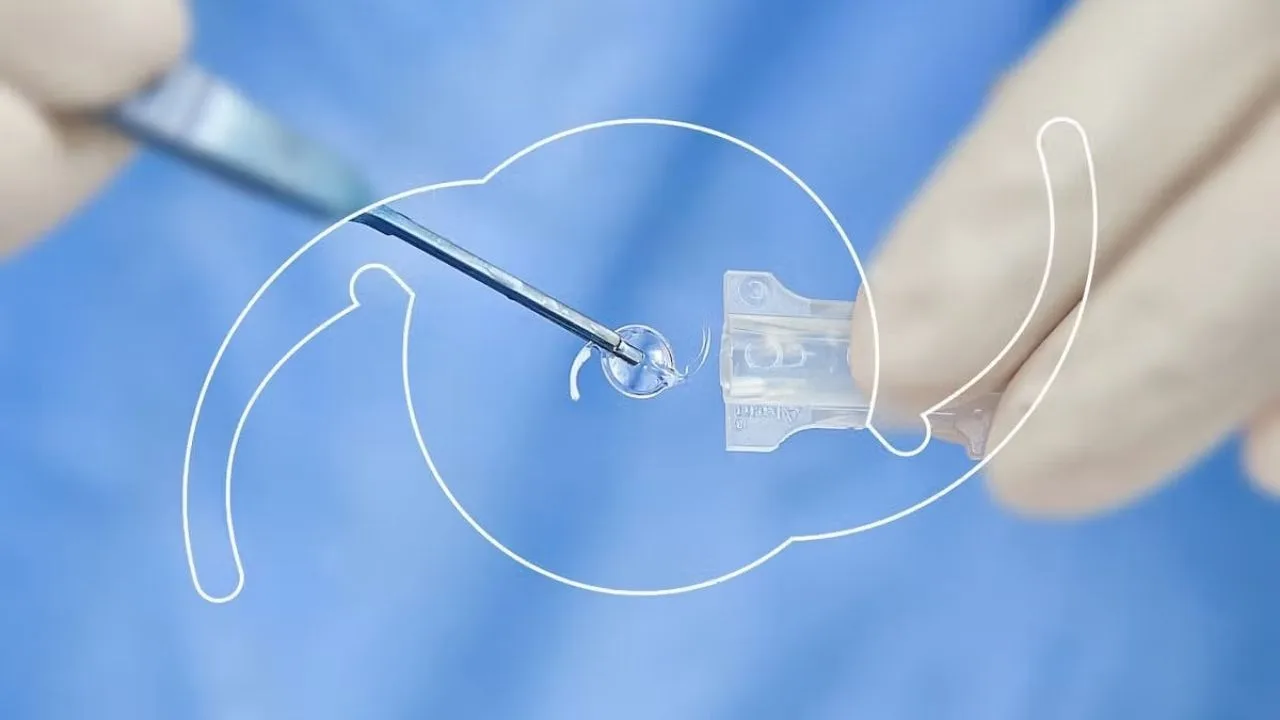
Multifocal intraocular lenses include
trifocal lenses, which provide clear vision at three distances: near, intermediate and far. People today stay far more active in middle and later life than in the past. They use computers, drive and take an active part in everyday life. These changing lifestyles have increased the need for clear vision at intermediate distance, and trifocal lenses meet that need. Trifocal lenses correct vision problems, and patients are also pleased with their better quality of life and with no longer having the cosmetic concerns that come with wearing glasses."
Over 40? Presbyopia Is on Its Way
Op. Dr. Nail Sönmez noted that patients over 40 in particular benefit from multifocal lenses because of presbyopia, and explained who the treatment suits: "We use trifocal lenses to treat refractive errors such as myopia, hyperopia and astigmatism in patients who cannot have laser treatment because their corneal thickness is unsuitable. Like other multifocal lenses, we also use trifocal lenses to treat eyes that have both
cataract and a refractive error. Trifocal lenses are especially popular with patients over 40 who want to say goodbye to their glasses. After the age of 40, the age-related loss of near vision, known as presbyopia, begins to appear: over time the lens of the eye loses its natural flexibility and with it the ability to focus up close.
Intraocular lens surgery is one of the most widely used treatments for presbyopia."
Choosing the Right Lens Matters
The treatment itself and recovery after surgery are what patients ask about most. Op. Dr. Nail Sönmez, Chief Physician of Kudret Eye İstanbul, explained: "As with any condition or complaint, patients first need a detailed eye examination. After the diagnosis, a treatment plan is drawn up and the intraocular lens to be used in surgery is chosen. Intraocular lenses fall into two groups: monofocal and multifocal; trifocal lenses are a type of multifocal lens. When choosing the lens, the patient's lifestyle and needs must be assessed as well as the structure of the eye. Choosing the right lens is as important as the surgeon's experience and expertise and the hospital's medical equipment. Patients tell us that their vision improves noticeably the day after surgery. Most return to daily life, including work, within 3-4 days, and full recovery takes about 3-4 weeks, although healing varies from patient to patient. Trifocal lenses are made with advanced technology to suit the natural structure of the eye, so problems such as the eye not tolerating the lens or an allergic reaction are extremely rare. The most common side effect is seeing halos and glare around lights, especially at night; in most patients the brain adapts within a few months and the complaint fades."




 Türkçe
 English
 Deutsch
 Nederlands
 Italiano
 Español
 Français
 Български
 Română
 Русский
 العربية