


 Türkçe
 English
 Deutsch
 Nederlands
 Italiano
 Español
 Français
 Български
 Română
 Русский
 العربية

What Does H52.0 Hypermetropia Mean?
- Kudret Eye Istanbul
- Last updated:
- 6 min read
- Medically reviewed by Op. Dr. Mehmet Ali Özdil
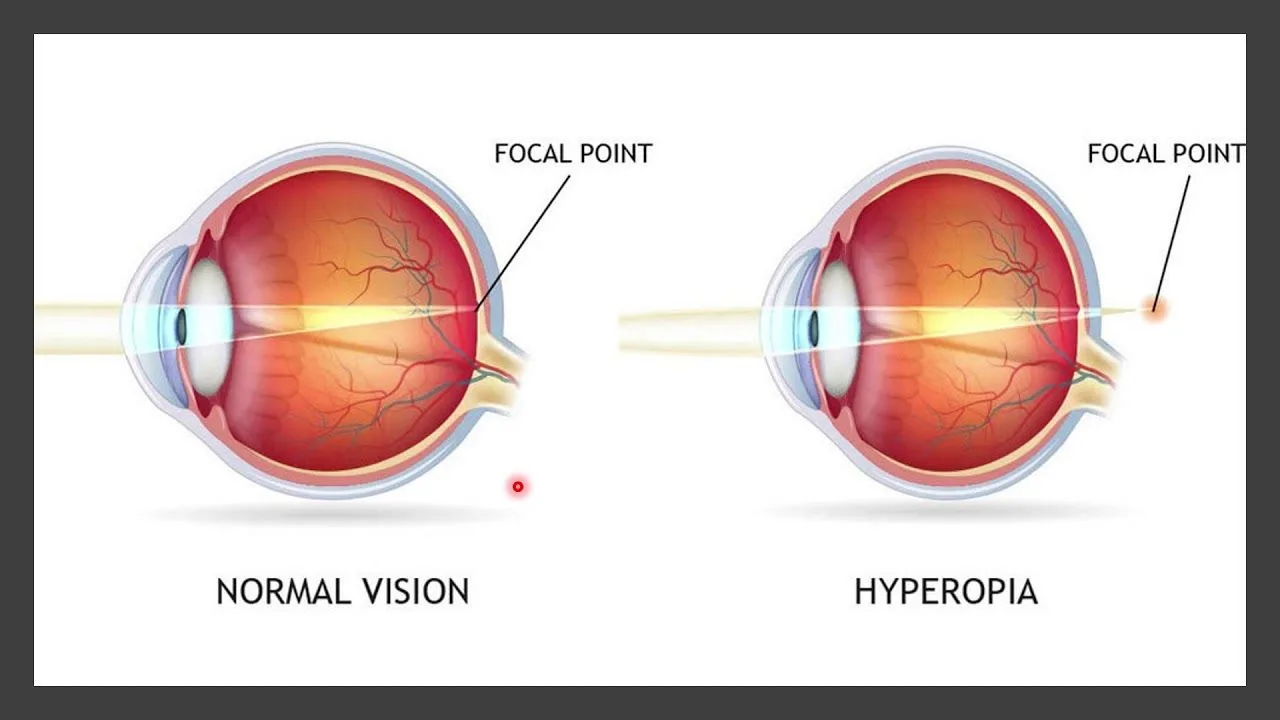
H52.0 is the diagnosis code for hypermetropia in the International Classification of Diseases (ICD-10). Hypermetropia, also called hyperopia or farsightedness, is a refractive error in which light entering the eye comes into focus behind the retina; it is not a disease. With mild hypermetropia, distance vision is usually clear while near objects look blurry; as the prescription increases, distance vision becomes blurry too.
What Does the H52.0 Diagnosis Code Mean?
H52.0 is the code that the World Health Organization's International Classification of Diseases (ICD-10) assigns to hypermetropia. If you see this code on your prescription or a medical report, your eye doctor has found hypermetropia in your eyes.
The code records the diagnosis your doctor made at the end of the examination. On its own, it does not tell you whether your prescription is high or low, or whether one or both eyes are affected. Your actual prescription is written separately on the prescription itself.
What Are the H52 Codes?
In ICD-10, the H52 group covers disorders of refraction and accommodation. Hypermetropia, myopia, astigmatism and presbyopia each have their own code within this group. If you have more than one refractive error, your prescription may list more than one H52 code.
| Code | Meaning |
|---|---|
| H52.0 | Hypermetropia (farsightedness) |
| H52.1 | Myopia (nearsightedness) |
| H52.2 | Astigmatism |
| H52.3 | Anisometropia and aniseikonia (a marked difference in prescription or image size between the two eyes) |
| H52.4 | Presbyopia |
You can read more about the astigmatism code in our article on H52.2 astigmatism.
What Is Hypermetropia?
Hypermetropia is a refractive error in which light rays entering the eye focus behind the retina, the light-sensitive layer at the back of the eye. The condition is called hypermetropia, and a person who has it is described as hypermetropic or farsighted.
People with hypermetropia often find close-up tasks such as reading, writing or computer work tiring. In school-age children, it may show up as tiring quickly while reading, rubbing the eyes or difficulty concentrating.
Genetics play the biggest role in hypermetropia. The most common form is axial hypermetropia, where the eye is shorter from front to back than it should be. Less often, a flatter cornea or changes in the focusing power of the eye's natural lens can also cause it. Causes and types are covered in detail in our article on what hypermetropia is.
What Are the Symptoms of Hypermetropia?
The most common symptoms are blurry near vision and eye strain or headaches during close-up work. Mild hypermetropia, especially in younger people, may cause few noticeable symptoms at first. Typical symptoms include:
- Blurry vision when looking at nearby objects
- Squinting without realising it to bring things into focus
- Aching or burning eyes during the day
- Eye strain and headaches during long periods of reading, writing, computer work or drawing
- Frequent blinking
- A feeling of dry eyes
- In some people, red or watery eyes
Adults usually notice the symptoms when close-up work becomes a struggle, whereas children may not be able to describe what they are experiencing. This is why children's eyes should be checked regularly once they start school. High hypermetropia that goes unnoticed and uncorrected can lead to a lazy eye (amblyopia) and, in some children, an inward turning eye.
How Is Hypermetropia Diagnosed?
Hypermetropia is diagnosed during an eye examination by measuring your prescription. Your doctor first listens to your concerns, then measures your prescription with an instrument and confirms it with trial lenses. The examination takes 15-30 minutes.
The prescription is measured with an autorefractor. In children and young people, the eye's focusing muscle can hide part of the hypermetropia, so the measurement may be repeated after drops that temporarily relax this muscle. Using trial lenses, you and your doctor find the lens that gives you both the sharpest and the most comfortable vision, and you receive your glasses prescription.
How Is Hypermetropia Treated?
Glasses or contact lenses are usually the first option. If your prescription has been stable for some time, laser treatment can be considered from the age of 18, and lens-based options may also be considered after 45. All options are described on our page about myopia and hypermetropia treatment.
| Glasses | Contact lenses | |
|---|---|---|
| Touching the eye | Less need to touch the eyes, which also lowers the risk of eye infection | Careful cleaning and hygiene are essential; less convenient than glasses |
| Dryness | No risk of contact lens related dryness or sensitivity | Wearing lenses longer than recommended can cause dryness and redness |
| Weather and surroundings | Offer some protection against wind and dust | No fogging up in cold weather |
| Sport | Can fall off or break | More practical for people who play sport often |
| Side vision | The frame can slightly limit side vision | No frame, so side vision is not restricted |
| Cost | Usually lower | Lenses and solutions need to be bought regularly |
For more detail on choosing glasses or contact lenses, see our article on the right lenses for hypermetropia.
Laser treatment for hypermetropia can be used for prescriptions up to +5 (depending on the method), and iLASIK is one of the methods offered at Kudret Eye İstanbul. After the age of 45, lens options are also considered. Your doctor will decide which method suits you after a full examination.
Adults without any eye complaints are advised to have an eye examination every 2 years until the age of 40, and once a year after 40.
Understanding your prescription
At the end of your eye test you are given a prescription, usually valid for two years. Its numbers and abbreviations describe the condition of your eyes and the correction you need. Tap a term and its column lights up in the table.
Sphere (SPH)
The main correction for short- or long-sightedness. A minus (−) means you struggle to see far away, a plus (+) means you struggle up close. The larger the number, the stronger the prescription.
Sample prescription
What Is the Difference Between Hypermetropia and Presbyopia?
Hypermetropia is a refractive error caused by the shape of the eye and can occur at any age. Presbyopia is the age-related loss of flexibility in the eye's natural lens, which makes near vision harder; it usually begins in your 40s. Because both make close-up vision difficult, they are often confused; in ICD-10, hypermetropia is coded H52.0 and presbyopia H52.4. People with hypermetropia usually notice near vision problems earlier and more strongly once they reach presbyopia age.
Frequently Asked Questions
- 1
What does the H52.0 diagnosis code mean?
H52.0 is the ICD-10 code for hypermetropia. On your prescription or medical report, it shows that hypermetropia has been found in your eyes; it does not show how strong your prescription is.
- 2
What is the difference between H52.0 and H52.4?
H52.0 stands for hypermetropia and H52.4 for presbyopia (age-related difficulty seeing up close). Hypermetropia is a refractive error that can occur at any age, whereas presbyopia usually appears in your 40s. A person can have both at the same time.
- 3
Does hypermetropia affect distance vision?
With mild hypermetropia, distance vision is usually clear. As the prescription increases, distance vision becomes blurry as well.
- 4
Can hypermetropia be corrected with laser surgery?
Laser treatment for hypermetropia can be used for prescriptions up to +5 (depending on the method) and is carried out after the age of 18. After 45, lens options are also considered. Your doctor will decide whether you are suitable after an examination.
- 5
Can hypermetropia cause a lazy eye in children?
Uncorrected hypermetropia that is high, or very different between the two eyes, can lead to a lazy eye in children. The risk is lower when it is detected early and corrected with glasses, which is why an eye examination before school age is important.
- 6
Does hypermetropia get worse with age?
Most babies are born slightly hypermetropic, and this usually decreases as they grow. In adults, the prescription often stays stable for many years. After your 40s, however, the eye's focusing power declines, so hypermetropia that went unnoticed before may become apparent and the need for glasses may increase.