


 Türkçe
 English
 Deutsch
 Nederlands
 Italiano
 Español
 Français
 Български
 Română

Neurological Eye Misalignment: Causes and Treatment
- Kudret Eye Istanbul
- Last updated:
- 7 min read
- Medically reviewed by Op. Dr. Mehmet Ali Özdil
Neurological eye misalignment (nerve-related squint) means the eyes no longer line up because the nerves that control the eye muscles, or their connections in the brain, have been affected. Unlike the squint seen in childhood, it usually starts suddenly in adulthood, and the most noticeable complaint is double vision. A squint or double vision that comes on suddenly needs a prompt eye examination so that its cause can be found. Our article on the causes of a sudden squint covers other possible reasons as well.
What Is Neurological Eye Misalignment?
Each eye is moved by six muscles, and these muscles are controlled by three nerves that come from the brain (the 3rd, 4th and 6th cranial nerves). Normally both eyes move together and look at the same point. When one of these nerves weakens, the muscle it supplies cannot work properly, the eyes lose their parallel alignment and a squint appears.
Neurological eye misalignment is a nerve-related form of strabismus (squint). Doctors name it after the affected nerve, for example "third nerve palsy", "fourth nerve palsy" or "sixth nerve palsy"; "palsy" here simply means that the nerve is working less than it should.
How Is It Different from Childhood Squint?
Childhood squint and neurological eye misalignment differ in when they start, whether they cause double vision and what causes them, so the first steps in treatment also differ.
| Childhood squint | Neurological (nerve-related) misalignment | |
|---|---|---|
| Onset | Usually in the first years of life, gradually | Usually in adulthood, suddenly |
| Double vision | Usually absent; the brain suppresses the image from the turned eye | Common and noticeable |
| Common causes | Refractive errors (especially long-sightedness), family history, premature birth | Diabetes, high blood pressure, head injury, neurological conditions |
| First approach | Glasses, patching, surgery if needed | Finding the cause, prisms, Botox or surgery if needed |
What Causes Neurological Eye Misalignment?
Neurological eye misalignment can be caused by systemic diseases that affect the nerves controlling the eye muscles, by a head injury or by neurological conditions. In adults, the most common cause is diabetes or high blood pressure affecting the small blood vessels that supply these nerves. Conditions that can lead to a nerve-related squint include:
- Poorly controlled diabetes
- High blood pressure
- Head injury
- Conditions affecting the blood vessels of the brain, such as stroke
- Neurological diseases such as multiple sclerosis
- Less commonly, a growth in the brain or raised pressure inside the skull
Diabetes can affect the eye in several other ways too, which we cover in a separate article. The causes of squint in childhood (premature birth, a difficult birth, illnesses with high fever, childhood cataract) are different and are explained in another article.
If you notice any change in the alignment of your eyes, it is important to see an eye doctor.
What Are the Symptoms?
The most common symptom of a squint that starts in adulthood is double vision. Because the brain cannot merge the two different images from the eyes, objects appear double; covering one eye makes the double vision disappear. This can make everyday tasks such as reading, driving or going down stairs difficult.
Symptoms of neurological eye misalignment include:
- Double vision (which disappears when one eye is covered)
- Loss of the parallel alignment of the eyes
- A drooping eyelid
- Being unable to move the eye in a certain direction
- Tilting or turning the head to one side to reduce double vision
Which symptoms appear depends on the nerve involved. For example, when the 6th nerve is affected, the eye cannot turn outwards and double vision gets worse when looking into the distance; when the 3rd nerve is affected, a drooping eyelid and an enlarged pupil may also occur.
How Is It Diagnosed?
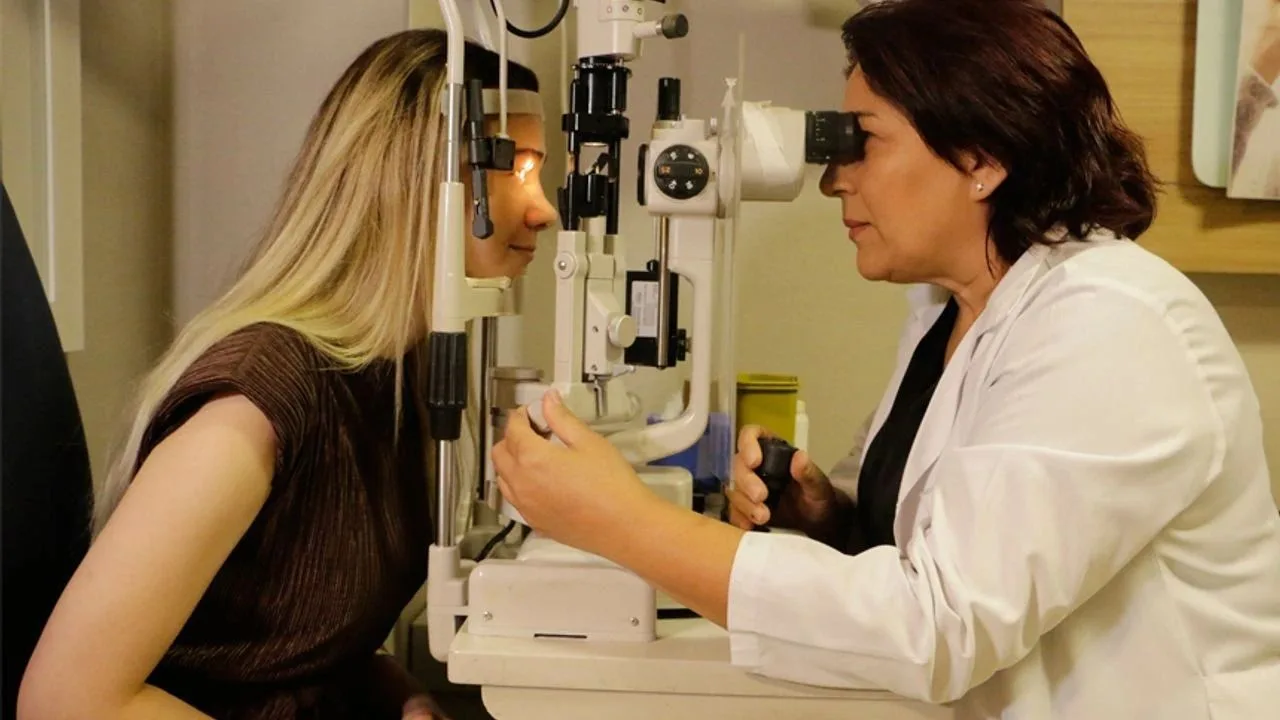
To diagnose neurological eye misalignment, the eye doctor examines your eye movements, measures the direction and size of the squint and checks in which direction of gaze the double vision gets worse. The pupils and eyelids are also assessed. These tests are not painful.
To find the cause, tests such as a blood sugar check and blood pressure measurement may be done. If the cause appears to be neurological, a brain scan (MRI) or an assessment by a neurologist may be requested.
Adults without symptoms are advised to have an eye examination every 2 years up to the age of 40 and once a year after 40. In babies, an intermittent squint can be normal during the first 3-4 months; a squint that continues after 6 months of age needs an examination.
How Is It Treated?
Treatment for neurological eye misalignment is planned according to the cause and your individual situation. The following factors play a role:
- Age
- Whether there is any loss of vision
- The cause of the squint
- The type of squint
Nerve palsies caused by diabetes or high blood pressure often improve partly or completely within a few months. Even if the squint improves on its own, the cause still needs to be investigated and followed up by a doctor.
Treatment in Adults
When a squint starts in adulthood, the doctor first identifies the condition causing it. Treatment options for squints that appear at this age include:
- Treating the underlying cause (for example, getting blood sugar and blood pressure under control)
- Covering one eye to relieve double vision temporarily
- Prism glasses
- Botox injections into the eye muscles
- Squint surgery
A prism can be added to your glasses to help merge the images from both eyes and is mostly used for smaller squints. Botox is used in some patients to rebalance the eye muscles temporarily while recovery is awaited. Surgery is usually considered once the squint has stayed stable for several months. After squint surgery, heavy physical activity should be avoided for 2-3 weeks; temporary double vision in the first days is normal, but if it continues you should see your doctor.
Treatment in Children
In children, a squint is often treated with glasses; if there is also a lazy eye (amblyopia), the stronger eye is covered for certain hours of the day. If the squint continues despite glasses, surgery may be needed. A lazy eye is an eye whose visual development has fallen behind because the brain uses the image from that eye less. Treatment of squint in children is described in detail on the related treatment page.
When Should You Seek Urgent Medical Help?
A squint or double vision that starts suddenly in adulthood needs to be investigated for an underlying cause. In this case, see an eye doctor without delay.
If sudden double vision or a squint is accompanied by a drooping eyelid, a severe headache, difficulty speaking, a drooping face or weakness in an arm or leg, go to an emergency department straight away.
Frequently Asked Questions
- 1
Does neurological eye misalignment go away on its own?
In some cases it does. Nerve palsies caused by diabetes or high blood pressure in particular often improve within a few months. The course depends on the cause, so it is important to have the cause investigated and to be followed up by a doctor.
- 2
Can a squint be a sign of a stroke?
Yes, although it is uncommon, a sudden squint or double vision can be a sign of a stroke. If it comes with difficulty speaking, a drooping face or weakness in an arm or leg, go to an emergency department straight away.
- 3
What causes sudden double vision in adults?
One of the most common causes is damage to the nerves that control the eye muscles; diabetes and high blood pressure can affect these nerves. Head injuries, neurological conditions and other diseases affecting the eye muscles can also cause double vision.
- 4
Can neurological eye misalignment be corrected with surgery?
If the squint does not improve on its own, surgery can help improve the alignment of the eyes and reduce double vision. It is usually considered once the squint has been stable for some time. After surgery, heavy physical activity should be avoided for 2-3 weeks; temporary double vision in the first days is normal.
- 5
Which doctor treats neurological eye misalignment?
The first assessment is done by an eye doctor; if the cause appears to be neurological, you will be followed up together with a neurologist.