




Eye Diseases
What is Hyperopic Astigmatism?
- Kudret Eye Istanbul
- Last updated:
- 6 min read
- Medically reviewed by Op. Dr. Mehmet Ali Özdil
Our eyes are among the most important sense organs connecting us to the world. They are our windows onto it, and clear vision affects our quality of life directly. That clarity can be disturbed for various reasons, however. Hyperopia and astigmatism, among the most common refractive errors, affect millions of people and can often be seen together. In this article you will find the answer to what hyperopic astigmatism is, what hyperopic astigmatism means, its symptoms, its causes and the treatments modern medicine offers, in detail.


What is Hyperopia?
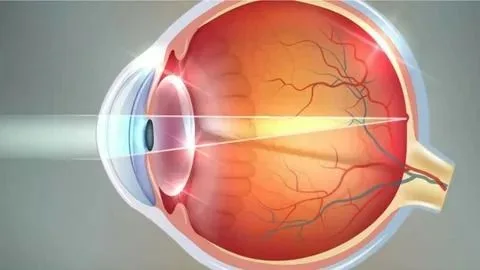
Known commonly as difficulty seeing at near, hyperopia is one of the refractive errors of the eye. In this situation the light arriving at the eye focuses not on the retina but behind it. This generally arises because the eyeball is shorter than normal, or because the refractive power of the cornea or the lens is insufficient. While people with mild hyperopia can usually see distant objects clearly, they see nearby objects and text as blurred; as the degree increases, distance vision also becomes blurred. At younger ages the eye's accommodation mechanism can compensate for this refractive error to some extent, so the symptoms may not appear immediately. As age advances, however, that ability declines and difficulty with near vision becomes more pronounced. In astigmatism the two main axes (meridians) of the eye have different refractive powers. When light focuses behind the retina in these meridians, it is called hyperopic astigmatism: if one meridian focuses on the retina and the other behind it, it is simple hyperopic astigmatism; if both focus behind the retina, it is compound hyperopic astigmatism. When light focuses in front of the retina, it is called myopic astigmatism. People with myopia see poorly at distance. People with hyperopia see more poorly at near. With astigmatism the situation differs: both distance and near vision can be affected.
What Are the Symptoms of Hyperopia?
The symptoms of hyperopia can differ from person to person and with the degree of the error. The most common are:- Seeing nearby objects as blurred
- Eye strain and pain
- Headache
- Needing to squint in order to see
- Inward deviation (squint) in children
- Burning and watering of the eyes
What is Astigmatism?
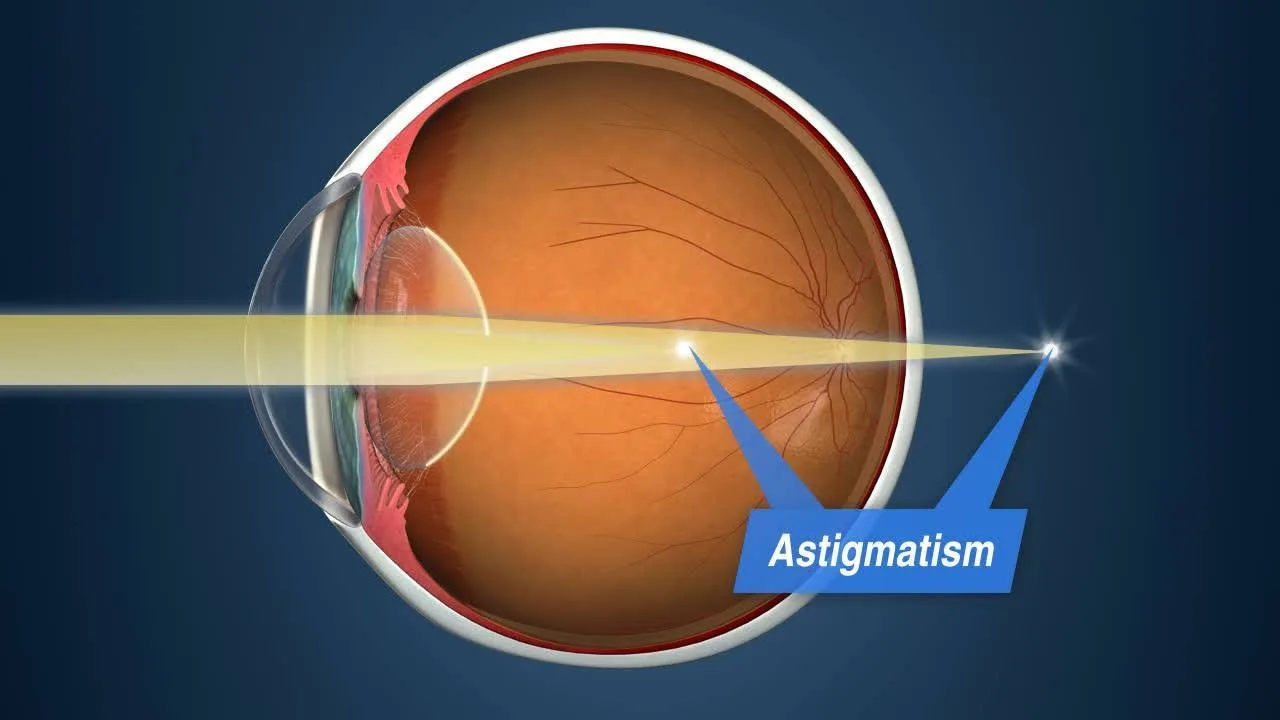
Astigmatism is another common refractive error, generally arising from an irregularity in the shape of the surface of the cornea, or more rarely of the lens. In a normal eye the cornea has the same curvature in every direction, like a ball. In an eye with astigmatism the cornea has different curvatures in different meridians, like an egg or the back of a spoon. This irregular structure prevents the light entering the eye from focusing at a single point on the retina. Instead, more than one focal point forms, which leads to blurred, distorted or shadowed vision at both distance and near. The most distinctive features of astigmatism are:- Blurred or distorted vision at every distance
- Shadowed or double vision
- Difficulty with night vision
- Eye strain and headache
- Tilting the head to one side in order to see
What Does Hyperopic Astigmatism Mean?
A person can have both hyperopia and astigmatism at the same time. This situation is called hyperopic astigmatism. It means that the eye both fails to see clearly at near, through hyperopia, and perceives the image as blurred and distorted because of the irregularity in the cornea, through astigmatism. In hyperopic astigmatism the refractive powers in the different meridians of the eye differ and the light focuses behind the retina in one or both of them. This can affect the quality of vision more than either error alone and can disturb both distance and near vision considerably.
Diagnosis and Treatment
Hyperopia and astigmatism can be diagnosed easily through a routine eye examination carried out by a specialist ophthalmologist. Following measurements taken with computerised devices called autorefractors, the degree and type of the error are determined precisely through a detailed examination by the doctor. Fortunately both refractive errors can be treated successfully today. The treatment options are personalised according to the patient's age, the degree of the error, their lifestyle and the structure of their eye. The course of treatment can take the following forms:1. Glasses
Wearing glasses is the most common, simple and safe way of correcting hyperopia and astigmatism.2. Contact Lenses
For those who would rather not wear glasses, contact lenses are an excellent alternative. They work on the same principle as glasses but are placed directly on the cornea.3. Refractive Surgery (Laser Eye Surgery)
For suitable candidates who want to be free of glasses and lenses permanently, laser eye surgery is a modern and effective solution. For hyperopic astigmatism, iLASIK and PRK / No Touch are used; ReLEx SMILE PRO is not used for hyperopia. In hyperopia, laser can be applied up to +5 dioptres, depending on the method. Suitability: for laser treatment the person must have turned eighteen, their prescription must not have changed significantly over the past year and the structure of their eye, including corneal thickness, must be suitable for surgery. Suitability is decided through a detailed eye examination.4. Intraocular Lenses (Phakic IOL and Multifocal Lens)
For patients with high degree hyperopia and astigmatism who are not suitable for laser treatment, intraocular lens implantation can be an option.- Phakic intraocular lenses: the person's own natural lens is left in place and an artificial lens is placed inside the eye.
- Refractive lens exchange (multifocal lens): generally in patients over forty, with or without cataract, the person's own natural lens is removed and a multifocal (trifocal) lens is put in its place. These lenses provide clear vision at distance, intermediate and near ranges; if astigmatism is present, choosing a toric lens allows hyperopia and astigmatism to be corrected at the same time.
Frequently Asked Questions
- 1
Can hyperopic astigmatism be treated completely?
Yes, in suitable patients it can be corrected permanently with laser surgery or an intraocular lens. Glasses and lenses correct the refractive error temporarily. - 2
What are the symptoms?
Blurred near vision, shadowed or distorted vision at both distance and near, headache and eye strain. - 3
Can laser treatment be applied to everyone?
No. Factors such as corneal thickness, prescription, eye health and age all determine suitability. - 4
Does hyperopic astigmatism matter in children?
Yes. If it is left untreated it can increase the risk of lazy eye and squint. Regular examination matters. - 5
Is wearing contact lenses safe?
It is safe as long as the rules of care and hygiene are followed, although care should be taken against the risk of infection.