




iLasik
550 £Per Eye
Femto Lasik (iDesign)
- Accommodation3 Nights
- Included
- 3 Meals a Day
- Included
- Airport TransfersRound-Trip
- Included
- Doctor Examination
- Included
- All Eye Tests
- Included
- Lasik Laser Surgery
- Included
- Surgery Control
- Included
- Pay On-Site

Treatments
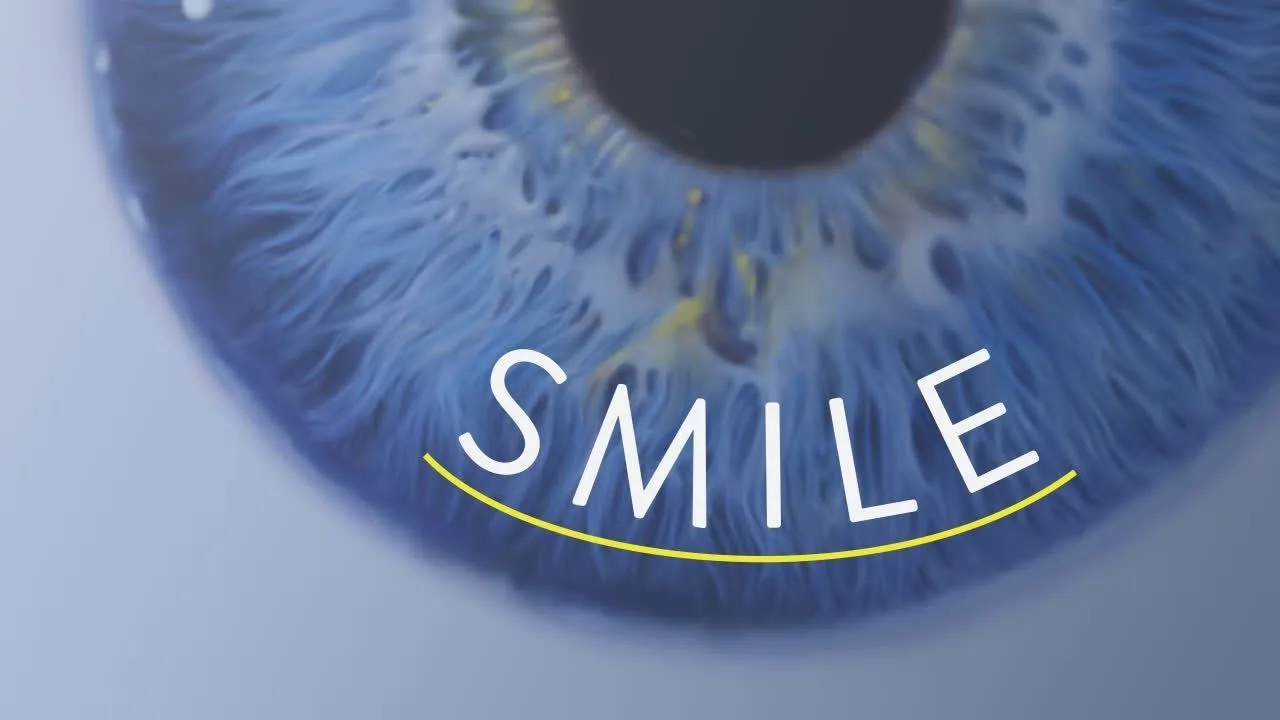
ReLEx SMILE PRO corrects myopia and astigmatism through a single incision of a few millimetres, without cutting a flap in the cornea.
Procedure Time
5-10 Minutes
Laser Time
A Few to 20-30 Seconds per Eye
Anaesthesia
Topical Eye Drops
Incision Width
2-4 mm
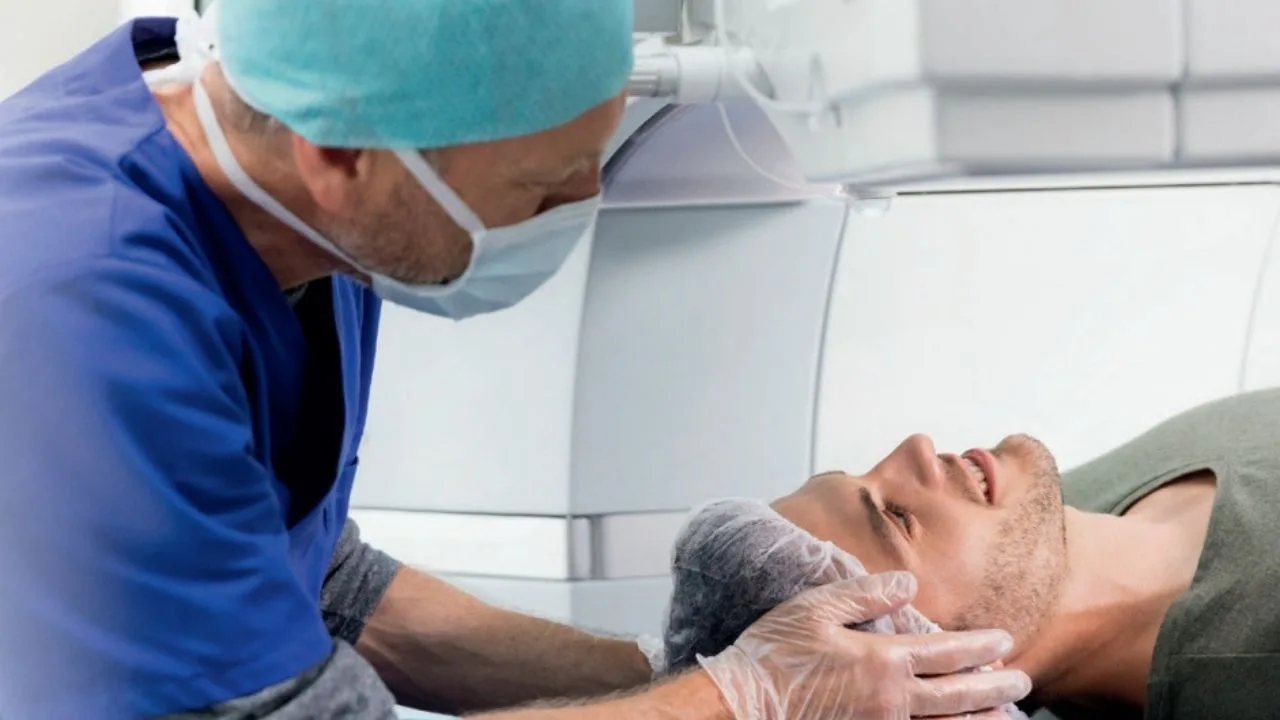
ReLEx SMILE PRO is a third-generation laser method used to correct myopia and the astigmatism that accompanies it. The name stands for Small Incision Lenticule Extraction. What separates it from LASIK and PRK is that no flap is cut in the front surface of the cornea, and the whole correction is done with a single laser in a single step.
During the procedure a femtosecond laser draws a thin lens shape inside the cornea without touching the surface. This piece of tissue is called a lenticule, and its thickness matches the refractive error being corrected. It is then removed through one incision only a few millimetres wide. With that tissue gone, the cornea takes on a new curve and the image falls on the retina.
Laser eye surgery has three generations. PRK and LASEK work from the surface by removing the outermost corneal layer. LASIK and iLASIK first cut a flap, then thin the tissue beneath it with an excimer laser. ReLEx SMILE PRO skips both steps: nothing is peeled and no flap is raised. The cornea is reshaped from the inside while the layers above it stay intact.
That difference means most of the nerve endings on the front surface of the cornea remain where they are. It is the reason dry-eye complaints are reported less often after ReLEx SMILE PRO. Because there is no flap, flap-related problems do not arise either, which matters to people who play contact sports or whose work carries a risk of a blow to the face.
The procedure is done under topical anaesthesia, meaning numbing drops placed in the eye. No injection and no general anaesthetic are involved. Both eyes are treated in the same session and the whole thing takes 5-10 minutes; the part where the laser is actually running lasts a few seconds to 20-30 seconds per eye, depending on the prescription.
ReLEx SMILE PRO is not right for everyone. Suitability is decided after an examination and a set of measurements. The general picture is this:
ReLEx SMILE PRO is not routinely used for patients with hyperopia alone; other methods are considered in that case. Over the age of forty, when difficulty with near vision (presbyopia) is part of the picture, laser on its own may not be enough and intraocular lens options are discussed as well.
Suitability test
A few short questions to show you which treatments would be discussed at your examination. At the end we will call you for a free consultation.
All three correct refractive error by reshaping the cornea. Where they differ is how the cornea is reached.
Which one is right for you depends on your prescription, your corneal thickness and the state of your ocular surface. For a side-by-side look, see the iLASIK and LASEK / PRK / No Touch pages.
For a few hours after surgery the eyes water, sting and are sensitive to light. That feeling usually passes the same evening. The first check-up is the next day, and most patients go back to their normal routine from then on.
Vision improves noticeably within the first days; sharpness settling down and night vision reaching its final state takes a few weeks. Through that period the drop schedule is followed without gaps, rubbing the eyes is avoided, and swimming pools and the sea are off limits until your surgeon says otherwise.
The week-by-week recovery steps are set out further down this page.
Eye laser treatments are well-established methods that have been performed on millions of people worldwide. The risks are low and most side effects are temporary; the suitability examination makes sure that eyes unsuitable for laser are identified beforehand.
The price depends on the method used and on the treatment plan agreed at your examination. The current list is below; the examination and the post-operative check-ups are included.
550 £Per Eye
550 £Per Eye
995 £Per Eye
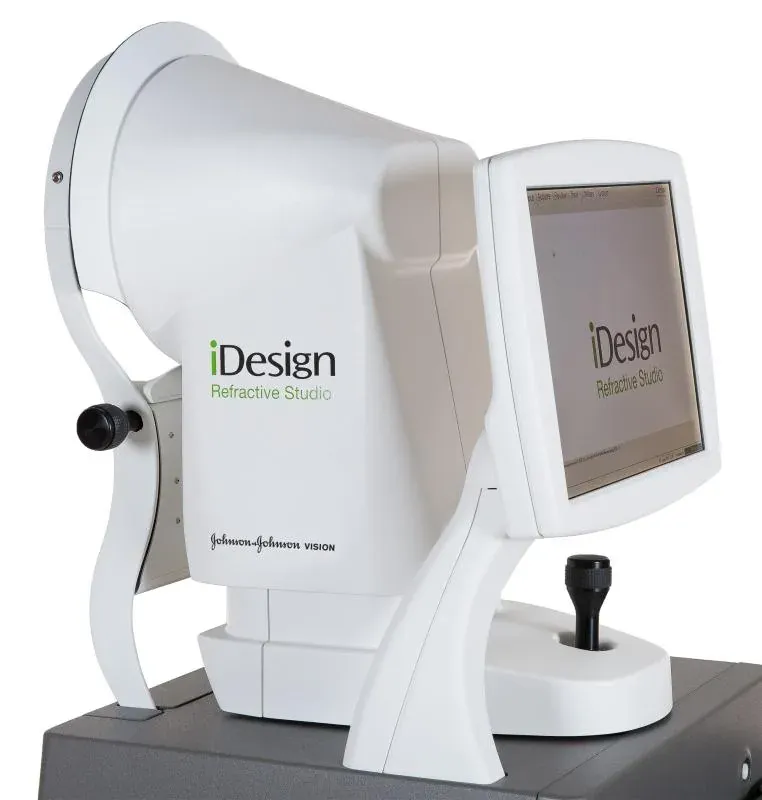
Johnson & Johnson Vision
The measurement device that captures the eye’s optical “fingerprint”. In a single scan it records refractive error at over 1,200 points, corneal topography and pupil metrics. The map is passed to the excimer laser, so treatment follows your eye’s own map rather than a standard prescription.
Why we chose this device
A spectacle prescription is a coarse summary of the eye's refractive error; this device takes thousands of separate readings across the same eye and maps them. Laser treatment is then planned around that eye's own pattern rather than an average figure, which is where night vision is won or lost.
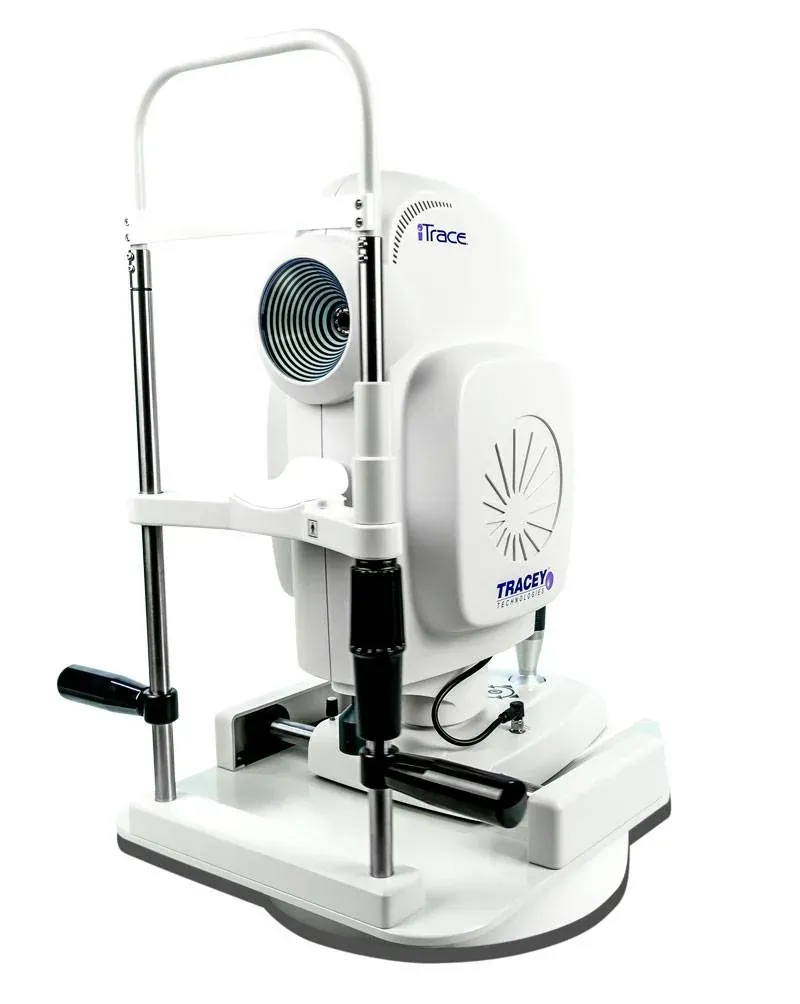
Tracey Technologies
A vision-quality analyser that splits the eye’s total refractive error into the parts coming from the cornea and from the natural lens. One of the measurements the surgeon relies on when deciding between laser and lens replacement, and when choosing a trifocal lens.
Why we chose this device
One of the methods that can tell whether a visual complaint comes from the cornea or from the lens inside the eye. That distinction changes the treatment: a corneal cause calls for laser, a lens cause for lens exchange. By ray-tracing the two separately, it keeps patients from being steered to the wrong procedure.
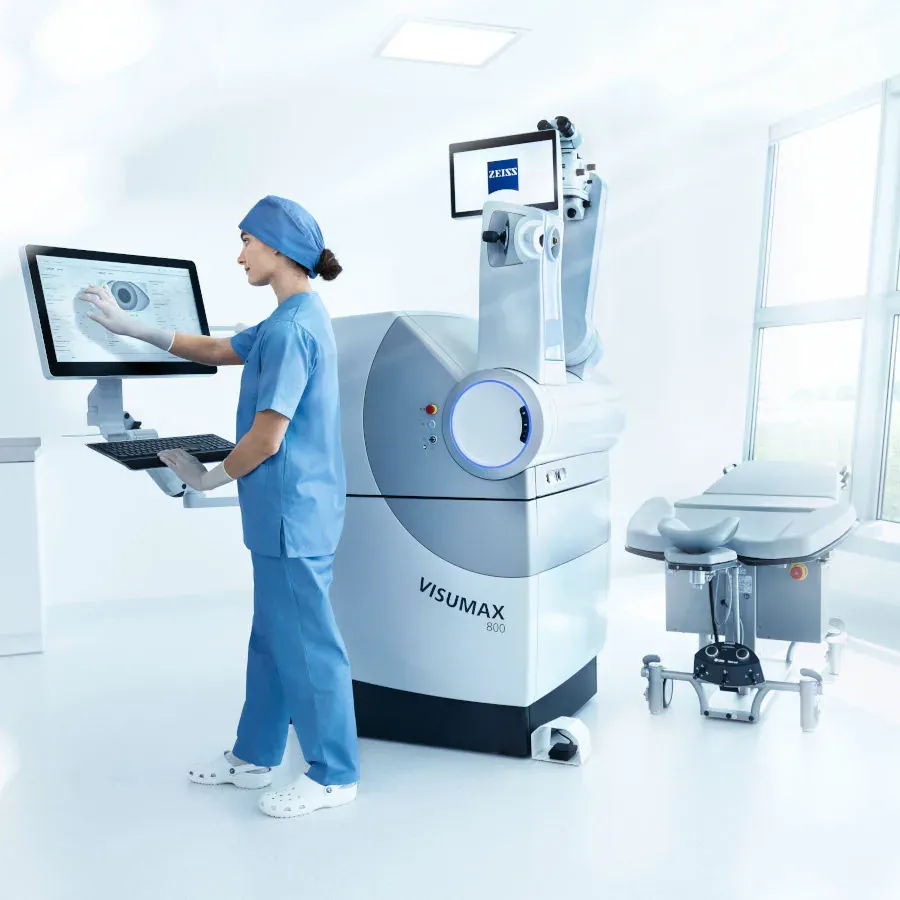
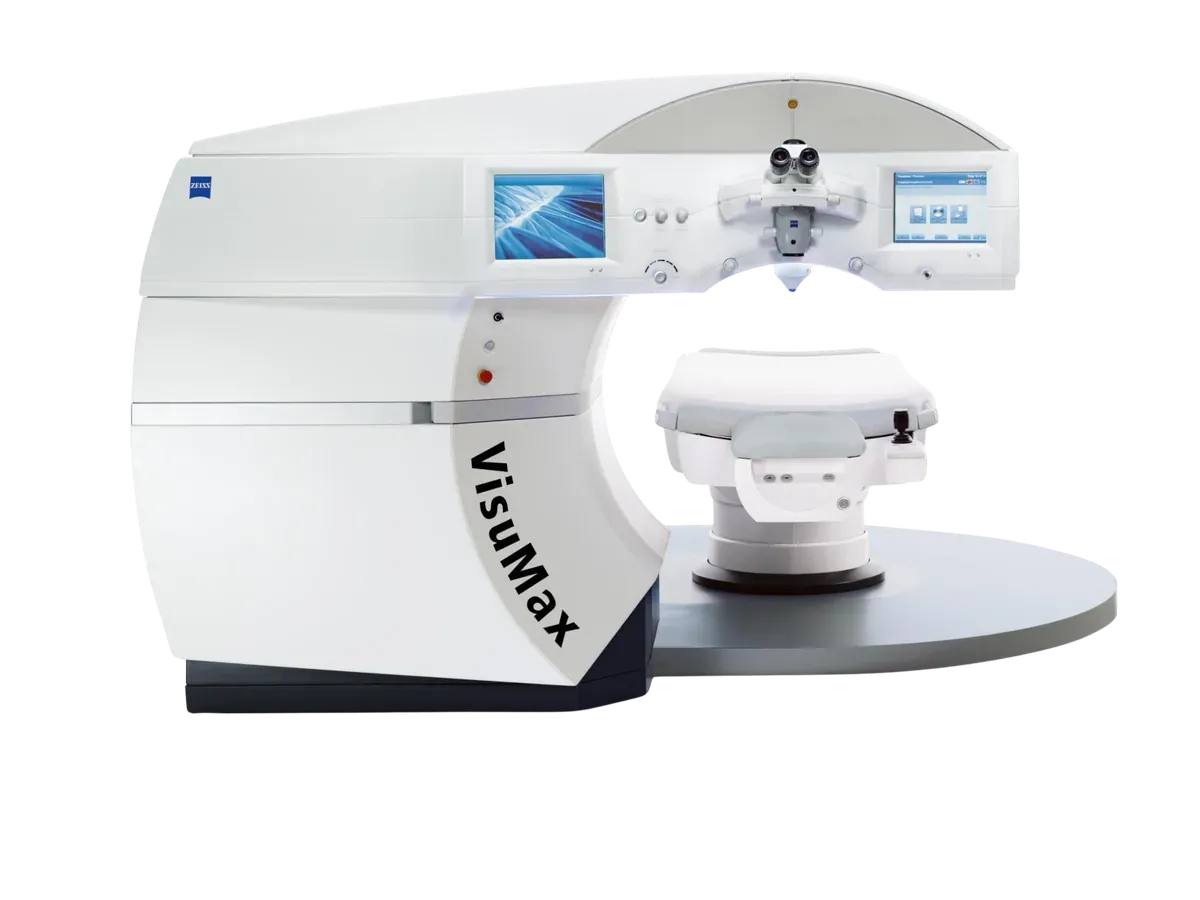
The femtosecond laser behind ReLEx SMILE PRO. It creates a thin lenticule inside the cornea and removes it through a 2-4 mm incision; no flap is cut. Lenticule cutting takes under 10 seconds per eye and the device tracks eye movement to centre itself.
Why we chose this device
On this laser the lenticule cut in SMILE takes seconds; the shorter the eye has to be held still, the smaller the margin for error from patient movement. Its eye tracking keeps the cut on the planned axis even if the eye shifts.
The femtosecond laser the ReLEx SMILE technique was developed on. It shapes a thin lens (lenticule) inside the cornea and removes it through a small incision, without raising a flap on the surface. A suction ring holds the eye with gentle contact, and the curved interface, matched to the eye's own curvature, spreads the pressure.
Why we chose this device
Most of the SMILE literature rests on results gathered on this platform, so the long-term data for the technique comes from this very device. Having it alongside the VISUMAX 800 means two femtosecond lasers: we can run two rooms on the same day, and a service visit does not push the surgery schedule.
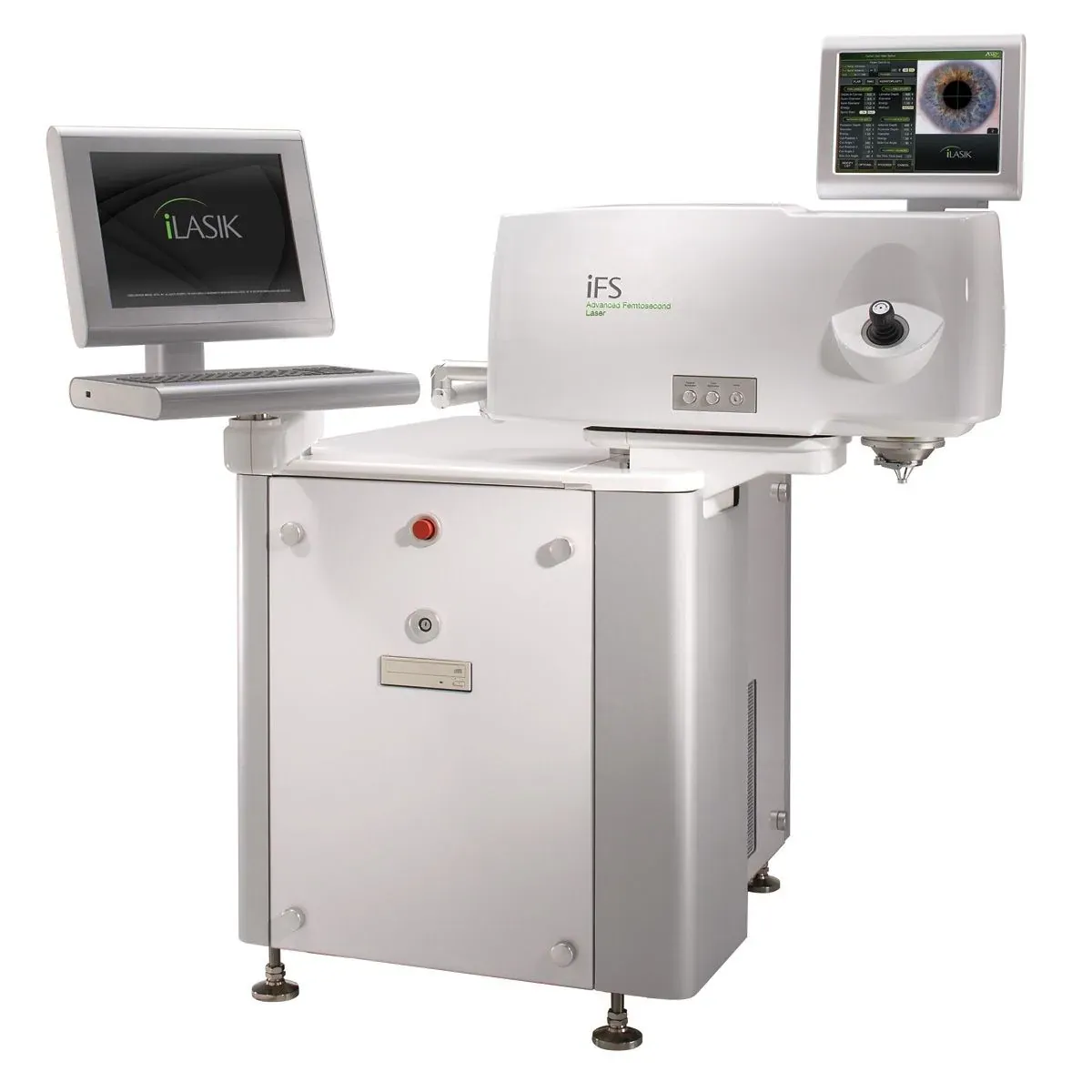
Johnson & Johnson Vision
The first step of iLASIK: the corneal flap is created 100 % blade-free with a femtosecond laser instead of a blade. At 150 kHz the flap forms in seconds, at the exact thickness and shape the surgeon sets, far more predictable than the older microkeratome. The device is the first link in the iLASIK platform developed by Abbott Medical Optics, today part of Johnson & Johnson Vision.
Why we chose this device
Creating the flap with a laser rather than a blade keeps its thickness uniform to the micron across the whole cornea. The 150 kHz speed shortens the step, and the bevelled edge lets the flap seat back more securely.
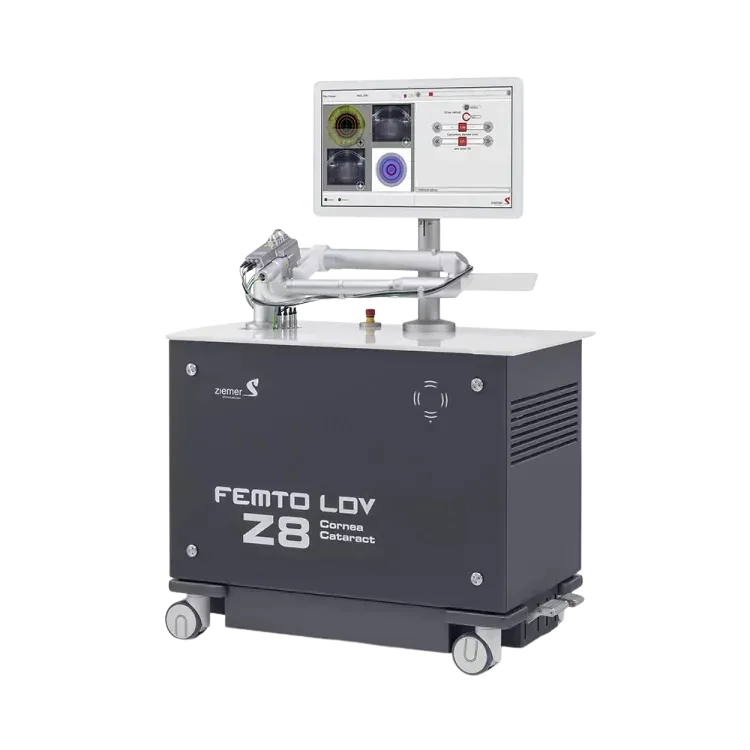
Ziemer
A mobile femtosecond laser usable in both corneal and cataract surgery. Its pulse energy is very low and its repetition rate very high, so cuts are formed from small overlapping spots. It can raise a flap, and in cataract surgery it opens the front capsule of the lens and fragments the lens itself. Being on wheels, the laser comes to the table rather than the patient being moved.
Why we chose this device
Opening the front capsule by hand is one of the steps in cataract surgery that most depends on the surgeon's experience; a laser-made capsulotomy comes out the same diameter and centred in every patient, which helps the intraocular lens sit where it should. That the device can be brought to the patient matters too: nobody is moved from one table to another mid-procedure.
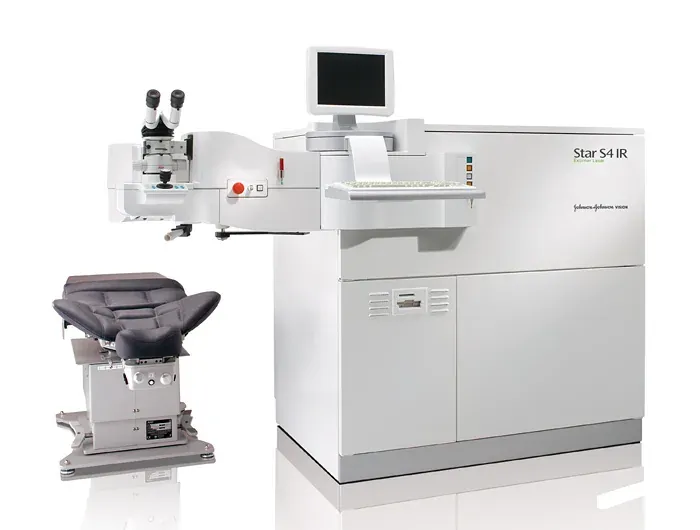
Johnson & Johnson Vision
The excimer laser of iLASIK’s second step. It reshapes corneal tissue with micron precision; infrared eye tracking keeps every pulse on target even if the eye moves. Paired with iDesign measurements it delivers a fully personalised (wavefront-guided) treatment. This laser is part of the iLASIK platform developed by Abbott Medical Optics, today part of Johnson & Johnson Vision.
Why we chose this device
Infrared eye tracking measures the small involuntary movements of the eye hundreds of times a second and keeps the laser on the same spot. Its variable spot size removes only as much tissue as needed, and the less cornea spent now, the more margin remains for a later touch-up.
Devices in eye care change quickly, and a newer system often means a shorter, more comfortable or more precise examination. We have renewed our equipment regularly since the day we opened, bringing new-generation systems into the clinic. This page is not fixed either: when a new device arrives, it is added here.
How it works
ReLEx SMILE PRO follows three steps: a thorough suitability examination, a procedure of 5-10 minutes for both eyes and a schedule of follow-up visits. Here is what happens at each stage, so you know what to expect.
Step 1
Pre-operative examination
We measure corneal thickness and shape, pupil size, tear film and your prescription in detail. Based on the results your surgeon confirms whether SMILE is suitable for you and what outcome to expect. Before the examination you will be asked to leave out soft contact lenses for 5 days and hard lenses for 2 weeks.
Step 2
Surgery
The procedure is done under anaesthetic drops, with no general anaesthesia; both eyes take 5-10 minutes in total and the laser itself works for a few seconds to 20-30 seconds per eye, depending on the prescription. No corneal flap is created: the lenticule is removed through a single incision of a few millimetres. You go home the same day with a companion.
Step 3
Follow-up visits
The first check is the next day; further visits at one week, one month and three months assess visual acuity and corneal healing. You follow the drop schedule your doctor gives you and avoid rubbing your eyes during the first week.
Recovery after laser eye surgery is quick; after iLASIK and SMILE most patients are back to their daily routine the next day; after PRK and No Touch this takes a few days. The timeline below summarises what to expect in the first three months.
First 4 hours
Burning, stinging, watering and light sensitivity are normal in the first hours. Rest with your eyes closed, do not rub them and start the prescribed drops straight away. Do not shower for the first 24 hours.
Day 1
The next day your surgeon checks corneal healing and visual acuity. After iLASIK and SMILE vision is already noticeably clearer for most patients at this stage; after PRK and No Touch it clears more slowly, with full clarity taking 2-4 weeks. Short periods of screen use are fine.
First days
After iLASIK and SMILE you can usually return to desk work the next day; after PRK and No Touch within a few days. Do not rub your eyes, avoid dusty and smoky places and wear sunglasses outdoors.
Week 1
Light exercise is allowed; avoid swimming pools and the sea for about 20 days, and saunas and eye make-up during the first week. Continue the drop schedule set by your doctor; it is reviewed at the one-week visit.
Month 1
Vision settles during this period; haloes around lights at night and any dryness gradually fade. The one-month visit assesses the result and adjusts the drop plan if needed.
Month 3
Corneal healing is largely complete; the three-month visit measures the final result and closes the follow-up. After that a routine yearly eye examination is enough.
Recovery times differ from person to person; this timeline is for information only.
Appointment
Measurements and the consultation with your surgeon are completed in a single visit; you leave knowing whether laser treatment suits you and which method fits your eyes.
Outstanding care from start to finish. The team ensured I was fully briefed before and upon my arrival, and I felt reassured throughout the entire procedure. Jem, Dr Mehmet Ali Ozdil and Zuhal delivered exceptional service and made me feel completely at ease during my Femto‑LASIK surgery. Note, following their simple aftercare instructions is also key to recovery.
They made the process of coming to a country where I don’t speak the language and having eye surgery (frightening enough in your home town) very easy indeed. I had a wonderful interpreter with me through the entire process every day, she made everything so easy. First class facilities, first class staff and a very convenient location.
A very kind and professional medical team! The surgery was completely straightforward and was completed relatively quickly. The entire team, and especially Zuhal, my patient coordinator, was always available, incredibly helpful, and genuinely pleasant throughout the whole process. She stayed by my side from start to finish, explained everything thoroughly, and always made sure I understood what was happening. The doctor worked in a very calm and professional manner, and I never felt uncertain or uncomfortable at any point. There were three fresh meals each day: breakfast, lunch, and dinner, and they were all very enjoyable. The hospital rooms were also very clean and well maintained. Overall, I had a very positive experience with this hospital. I’m truly grateful to the entire team and would wholeheartedly recommend this hospital to anyone.
Hello, so I went to Optical Express in UK but they quoted me an insanely high price for LASIK Surgery. After conducting research on multiple different hospitals and eye surgery places in Turkey. I settled on Kudret Goz. Throughout the entire period they were helpful in answering all my questions and very supportive. They have very experienced doctors who perform LASIK surgery multiple times a day for 20 years plus using the latest Johnson and Johnson technology. As soon as I landed at the airport they picked me up, dropped me at the hospital where I had my own comfortable room. They provided breakfast, lunch and dinner. In the morning they conducted tests to check my vision and if I’m feasible for the surgery, the same evening the surgery happened. I was nervous but It lasted 5 - 10 minutes and rested in my room that evening taking eye drops and disinfect eye drops every hour. The next day I woke up and my vision had become incredibly better, with every passing hour it got better and better. Within 24 hours my vision was incredibly clear and I was amazed. Thank you for operating the surgery and truly providing a life changing experience. For the price and quality of service Kudret Goz is unrivalled.
I have just returned from having Lens transplantation at Kudret Eye Hospital Istanbul. I was a lone traveller who was terrified at the prospect of eye surgery even having done my research. I have to say ALL the staff at Kudret were absolutely amazing. From 1st contacting them the communication was excellent no question was too much and always received a very prompt response. I was met at the airport in the middle of the night and taken straight to the hospital, was shown to my room. I felt very safe. I had numerous test the following day and then a consultation with the Doctor who advised me of my best implants. There was always someone with me who was able to translate anything said. I had my 1st op that afternoon again I felt safe and very confident with the professionalism of all the staff. Surgery took approximately 20 mins. I had no pain and the next day was able to see near intermediate and distance although not 100% but without glasses. After further checks I then went in for my second surgery. Again all went smoothly. The following day sight had improved even more in my 1st eye and then on removal of my eye patch my 2nd eye sight was great. I am thrilled to be glasses free and my vision improves every day. I was told it can take between 1 -3 weeks for the full result. I was given eye drops for home and full care instructions. I am very grateful to all those involved in my journey Thank you.
I visited OE in the UK, which quoted £5,500 for a LASIK surgery on both my eyes. As a result, I subsequently contacted Kudret Goz Istanbul via WhatsApp, and I must say I was very impressed by the level and quality of service. The initial contact person, Cem, was very helpful and explained the process, cost (much more reasonable than the UK clinic), and aftercare procedures very clearly. The doctor that I was assigned was Dr Nail Sönmez, who was very experienced and conducted a very effective iLASIK surgery, which only lasted about 10-15 minutes, and led to a significant improvement in my vision. He was also very transparent about the associated risks involved after the operation and advised how those could be mitigated after the surgery. Although the doctor and Cem spoke English, I was also assigned a translator, Zuhal, who was very friendly and helped me communicate with other hospital staff when needed. Therefore, I highly recommend Kudret Goz Istanbul for any UK resident seeking high-quality LASIK eye surgery at an affordable price.
My wife and I both had lens replacement here due to both having cataracts. I have to say from start to finish the whole experience was excellent. Careing helpful staff took care of all our needs and queries. Experienced expert surgeon did the operations on both eyes which only takes around 10 to 15 minutes and is completely painless. Excellent aftercare after the operations. Excellent value especially compared to the UK. For the two of us we paid plot less than one operation would cost in the UK. In particular I would like to thank Gem and Zuhan, both of whom speak English, for their care and attention also i would like to thank Dr Mehmet for his expertise. We have been home now for a month or so and our vision just keeps getting better and better as explained. I have no hesitation in recommding this excellent hospital. Thanks for our new eyes.
My sister and I recently traveled from London to Istanbul for laser eye operations, and I cannot rave enough about the exceptional care we received at Kudret Göz. Despite arriving at 4:30 AM, our pre-booked transport was seamlessly ready, whisking us directly to the hospital. From the moment we stepped through the doors, the warm welcome and hospitality made us feel instantly at ease. We were promptly shown to our rooms, and the staff's genuine kindness and attentiveness completely calmed any pre-operation jitters. They truly went above and beyond to ensure we felt relaxed and comfortable throughout the entire process. Beyond the outstanding medical care, the hospital's location is a huge bonus. Theres a massive mall called the Nautilus less than a 5 minute walk away from the hospital. It has amazing food spots along with some familiar ones. Overall, I'm beyond delighted with my experience at Kudret Göz. I was truly astounded by the immense effort they put in to ensure such a seamless and positive visit, all at an incredibly fair price!!
As someone who doesn't write reviews, I feel that this is an important opportunity to reach out to others. I was full of doubts , insecurity and skepticism about this procedure. I bought into all the negatives and downsides of lens replacement surgery , Whilst doing my research . After speaking to Jem , who put no pressure on me to sell me this . I trusted and respected him . There are many places in Turkey ( Medical tourism). , who are pushy , and run clinics offering , Hair , teeth , eyes ect. Kudret goz is a eye hospital that specializes in just eyes. I did arrive nervous, But saw how professional they are. The staff were super and so friendly, From the cleaners , security, receptionists and doctors . The place was spotless and I was comfortable, even 3 hospital meals per day. I'm amazed that my results are immediate. I can see perfectly 20/20 vision both eyes . No halos . Minimal irritation in eyes after op for an hour or 2. I'm amazed at how easy it is . I flew back to Bristol and drove back to South wales late at night . And my eyes at night were spot on . I'm delighted to not be wearing glasses anymore. Which Is given me freedom and a new confidence. I ride motorbikes and can't wait to get out on the bike 🏍. Looking forward to snooker , swimming and playing football. No glasses . My advice would be not to read to much ( scare mongering tactics) i would recommend this to everyone , family , friends and anyone who wants to listen . Best couple of grand I've ever spent . Update . 1 month on perfect vision . No problems.
Easy process to book appointment, clear communication throughout. The hospital I clean and well-equipped. The staff friendly and helpful. A translator on hand from the moment I arrived until I left The preparation and tests pror to the Yag laser procedure, faultless. Clear information given on each part if the process. The procedure was painless, and no ill effects and I could see clearly about 30 minutes after the procedure. I cannot recommend them enough .
I’m very happy I chose to have my LASIK procedure done at Kudret Göz in Istanbul. From the beginning, the communication was excellent. They speak very good English and were quick to respond to all my questions via text, which made the entire process much easier. On the day of the operation, everything moved efficiently and smoothly. I felt completely comfortable during each test and step of the procedure. The doctor also spoke excellent English and took the time to reassure me with all my questions. The rest of the staff were incredibly helpful and professional, and the clinic itself was very clean and well-organized. I would highly recommend Kudret Göz to anyone considering LASIK.
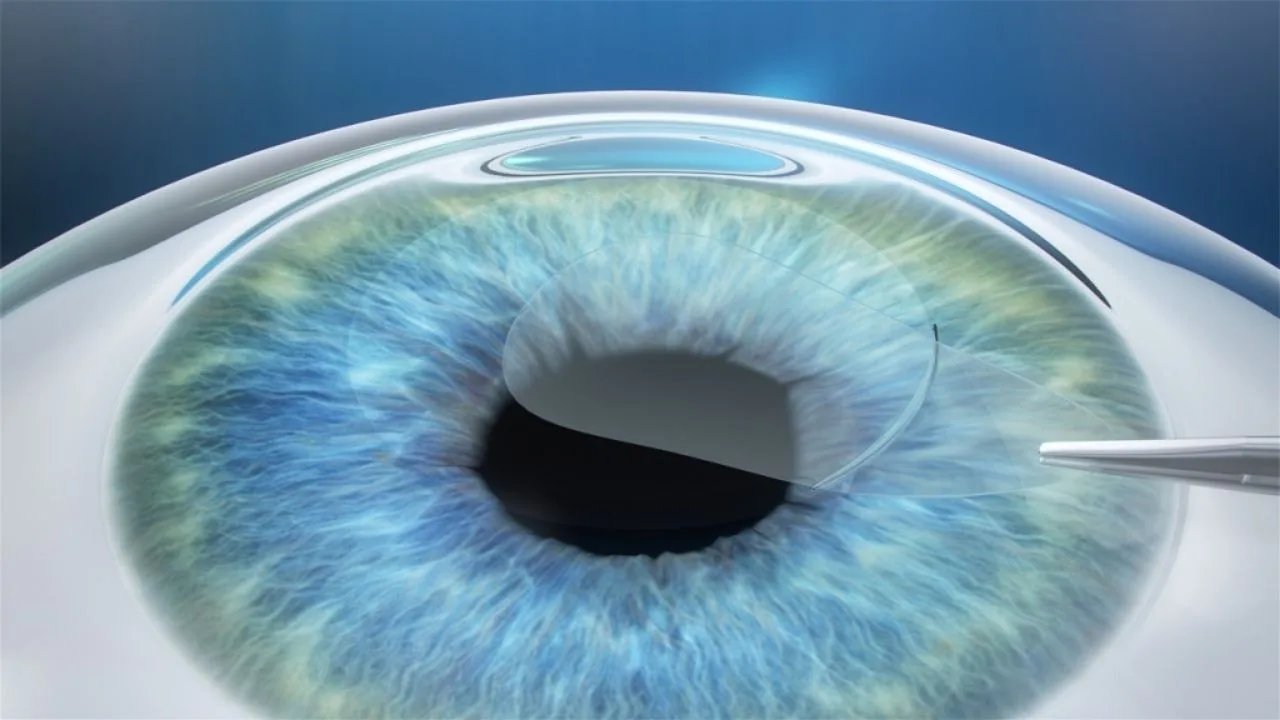
ReLEx SMILE PRO corrects myopia and astigmatism through a tiny incision, without creating a flap in the cornea. This article explains how it works,…
Your cookie choice
Cookies needed for the site to work are always on. With your permission we also use Google and Meta cookies to measure visits and show you relevant ads. You can change your choice at any time with the "Cookie settings" link at the bottom of the page.Detailed Information