





Eye Diseases
Should Astigmatism Glasses Be Worn All the Time?
- Kudret Eye Istanbul
- Last updated:
- 6 min read
- Medically reviewed by Op. Dr. Mehmet Ali Özdil
Astigmatism glasses may be prescribed where a person has blurring in their distance vision, their near vision or both. They help objects to be seen more clearly. Beyond providing clear vision, wearing glasses is not a form of treatment and does not remove astigmatism altogether. Not wearing them does not make the degree of astigmatism progress; it simply means that vision is not corrected.
As for whether astigmatism glasses should be worn all the time, people with a low prescription below 0.75 generally do not need glasses; if they have complaints, the doctor may recommend them. Routine check-ups must always be attended, however. For patients with moderate or high astigmatism (0.75 and above), on the other hand, glasses must be worn regularly and eye examinations carried out frequently.

What Causes Astigmatism?
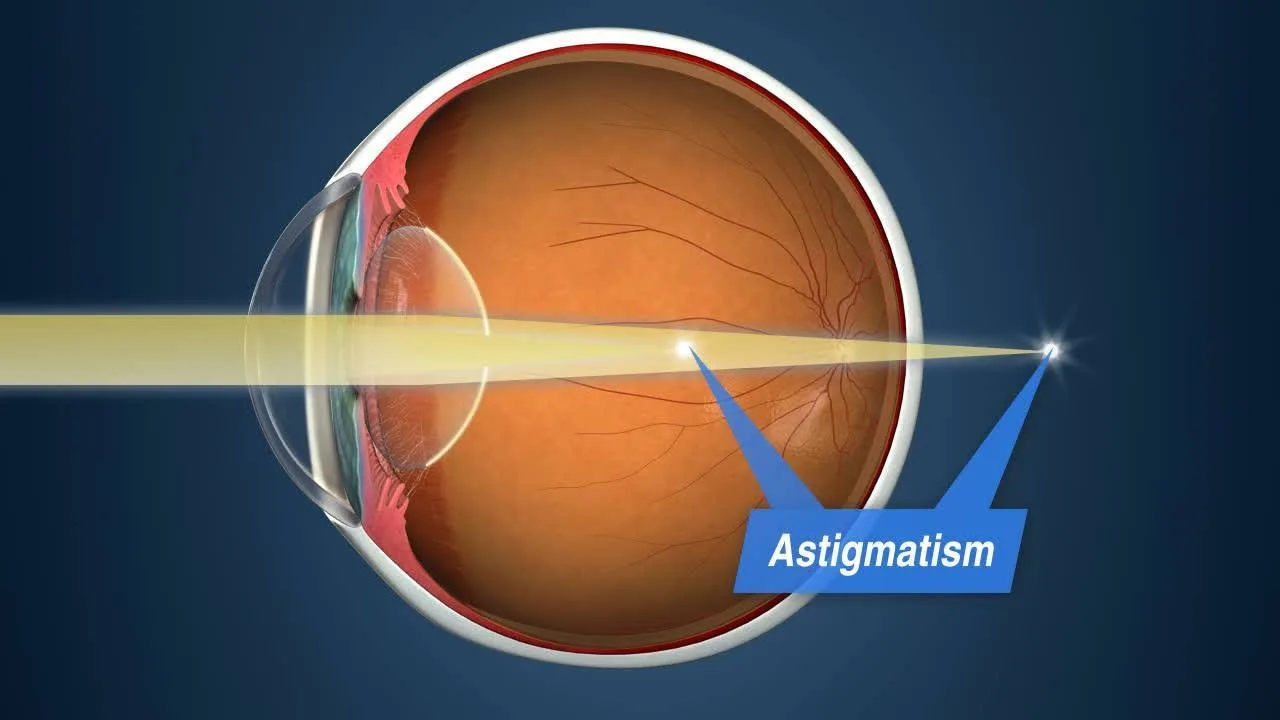
Astigmatism arises when the cornea and the lens of the eye develop in a shape other than the one they should have. It is connected to the curvature of the cornea or of the lens not being perfectly round. In most people it is linked to a genetic predisposition. Its causes are:- Genetic factors
- Pressure on the cornea from the eyelids
- Eye surgery
- Complications arising during eye surgery
- Eye injuries
- Keratoconus
What Are the Symptoms of Astigmatism?
The symptoms of astigmatism show themselves most commonly as an inability to see objects clearly at distance and at near. Alongside this, pain in the head and eyes and more frequent dizziness are among the effects met most often. The other symptoms are:- Feeling tired and having pain around the eyes despite resting them
- Needing to squint in order to bring distant or nearby objects into focus
- A decline in night vision
- Watering of the eyes
What Are the Degrees of Astigmatism?
The degree of astigmatism is named with the unit of measurement called the dioptre (D). Degrees are generally measured between a lowest of 0.25 and a highest of 6.00, and treatment is shaped around the values that emerge from an eye examination. The three main categories are as follows:- Low degree astigmatism: this covers people with a prescription below 0.75. It is generally mild astigmatism, that is the beginning stage. Vision problems rarely appear in this group, so glasses or lenses are generally not needed; if there are complaints, the doctor may recommend them. Check-ups with a doctor should nonetheless be attended at regular intervals.
- Moderate astigmatism: this is the group met most often today among the degrees of astigmatism. People with values between 0.75 and 2.00 fall into it. Clarity of distance vision, of near vision or of both can fall noticeably. Alongside the vision problem, complaints of headache and eye strain are possible. For clear vision, doctors recommend glasses or toric contact lenses.
- High degree astigmatism: patients in this group have a prescription above 2.00. The quality of their vision is seriously impaired and objects are perceived as distorted and wavy. For people at this degree, carrying out daily activities becomes harder by the day while they remain untreated. For treatment, refractive surgery such as LASIK can be used alongside glasses or lenses, depending on the person's situation. It matters a great deal that patients with astigmatism at this degree attend their check-ups as often as the doctor recommends.
How Does Astigmatism Affect Daily Life?
Astigmatism can affect a person's life in various ways depending on the degree of the refractive error and on their lifestyle. The effects patients with astigmatism meet commonly in daily life are:- Blurred or distorted vision while driving. Objects lacking clarity, shadowed vision and double vision are among the most noticeable effects.
- Feeling tiredness in the eyes and straining to bring an object into focus.
- Recurring headaches concentrated in the head area, caused by straining the eyes.
- Considerable difficulty with night vision.
- Difficulty concentrating on a book, a phone, study or work, and increasing lapses in attention.
- Squinting without realising it in order to see an object clearly.
- Where severe astigmatism is present, depth perception can be affected, which can lead to a loss of balance when climbing stairs or in busy surroundings.
How is Astigmatism Diagnosed and Treated?
Diagnosis of astigmatism generally begins with the person's symptoms. Doctors ask whether there is a problem with their vision, whether they have headaches and whether they feel pain in their eyes. The diagnosis is then made precisely with the tests that follow. Those tests are:- Keratometry
- Refraction test
- Visual acuity test
- Phakic intraocular lens surgery
- Intraocular lenses
- Toric trifocal intraocular lenses, which correct astigmatism
Frequently Asked Questions
- 1
Is it essential to wear astigmatism glasses all the time?
Some people with mild astigmatism can manage without wearing glasses through the day. Regular wear is more comfortable, however, while driving, while working at a screen for long periods, or where there is headache and eye strain. An eye examination determines the right plan. - 2
Will my astigmatism get worse if I do not wear glasses?
Not wearing glasses generally does not increase the degree of astigmatism directly, although complaints such as blurred vision, eye strain and headache can continue. If the degree does change, a check-up is needed to look into the underlying causes. (Source: American Academy of Ophthalmology) - 3
What are the most common symptoms of astigmatism?
Blurring at distance or near, a sense of shadowed or double vision, eye strain, headache and difficulty with night vision in particular are all common. If the complaints persist, an examination is recommended. - 4
Does astigmatism progress?
Measurements of astigmatism can change over time, and in conditions such as keratoconus in particular they can increase. Regular examination therefore matters. - 5
Are contact lenses or glasses better?
Both can correct astigmatism. Glasses are practical and safe, while toric contact lenses can offer a wider field of vision in some people. Suitability is assessed according to the structure of the eye and to lifestyle. - 6
Can laser correct astigmatism completely?
In some patients laser surgery can reduce or correct astigmatism, but not everyone is suitable for laser. Factors such as the structure of the cornea, the stability of the prescription and dry eye are all assessed. Where it is not suitable, other options can be considered. How to Book an Eye Appointment