




What Is a Femtosecond Laser?
- Kudret Eye Istanbul
- Last updated:
- 6 min read
- Medically reviewed by Op. Dr. Mehmet Ali Özdil
A femtosecond laser is a type of laser that separates tissue with great precision using extremely short pulses of light, each lasting about one quadrillionth of a second. In eye surgery it is used to make incisions in the cornea. At Kudret Eye İstanbul, the flap in iLASIK is created with a femtosecond laser, and ReLEx SMILE Pro is also performed with a femtosecond laser.
If you are considering laser eye surgery, this article explains how a femtosecond laser works in the eye, which procedures it is used in and how it differs from an excimer laser.
What Does Femtosecond Mean?
A femtosecond is one quadrillionth of a second (10⁻¹⁵ seconds). A blink of the eye lasts about 0.3 seconds; a femtosecond is 300 trillion times shorter. The femtosecond laser takes its name from these extremely short pulses of light.
Because the light is delivered in such short bursts, very little heat spreads into the tissue and extremely fine incisions become possible. Femtosecond laser pulses are a thousand times shorter than picosecond (10⁻¹² seconds) laser pulses. In eye surgery, femtosecond lasers are used for incisions in the cornea.
How Does a Femtosecond Laser Work in the Eye?
A femtosecond laser focuses light at a set depth inside the cornea and separates the tissue only at that point. Because the pulses are so short, very little heat spreads to the surrounding tissue.
The basic steps are:
- Generating ultra-short pulses: special resonators and pulse compression techniques produce laser pulses lasting femtoseconds.
- Focusing the energy: these short pulses are concentrated on a single point, creating a high energy density.
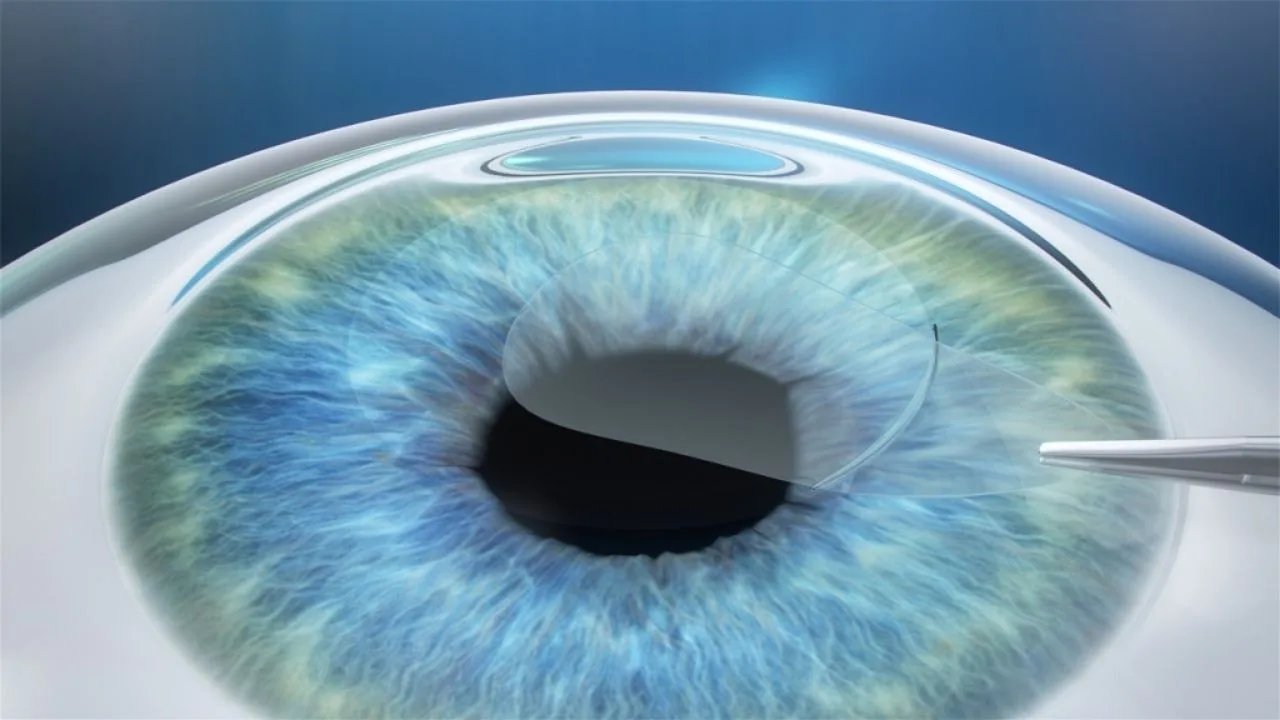
- Separating tissue from within: instead of vaporising the surface of the cornea, each pulse separates tissue at a planned depth inside it. Thousands of tiny separation points placed side by side join up to form a smooth cutting plane.
- A precise, controlled incision: because very little heat builds up, the surrounding tissue is largely preserved.
This is what makes the femtosecond laser useful in eye operations that require very thin, controlled incisions in the cornea.
Which Eye Operations Use a Femtosecond Laser?
At Kudret Eye İstanbul, the femtosecond laser is used in iLASIK and ReLEx SMILE Pro. In both methods the femtosecond laser makes the incision in the cornea; the difference lies in the shape of that incision.
In iLASIK, the femtosecond laser creates a thin flap in the upper part of the cornea; an excimer laser then reshapes the tissue underneath to correct your prescription. In ReLEx SMILE Pro, no flap is created: the femtosecond laser prepares a thin disc of tissue (a lenticule) inside the cornea, which is removed through a small 2-4 mm incision.
Beyond vision correction, femtosecond lasers can also be used in other areas of eye surgery. Examples include corneal transplantation, creating channels for corneal ring implants in keratoconus, and certain steps of some cataract operations. Your ophthalmologist will assess at your examination whether any of these applications is suitable for you.
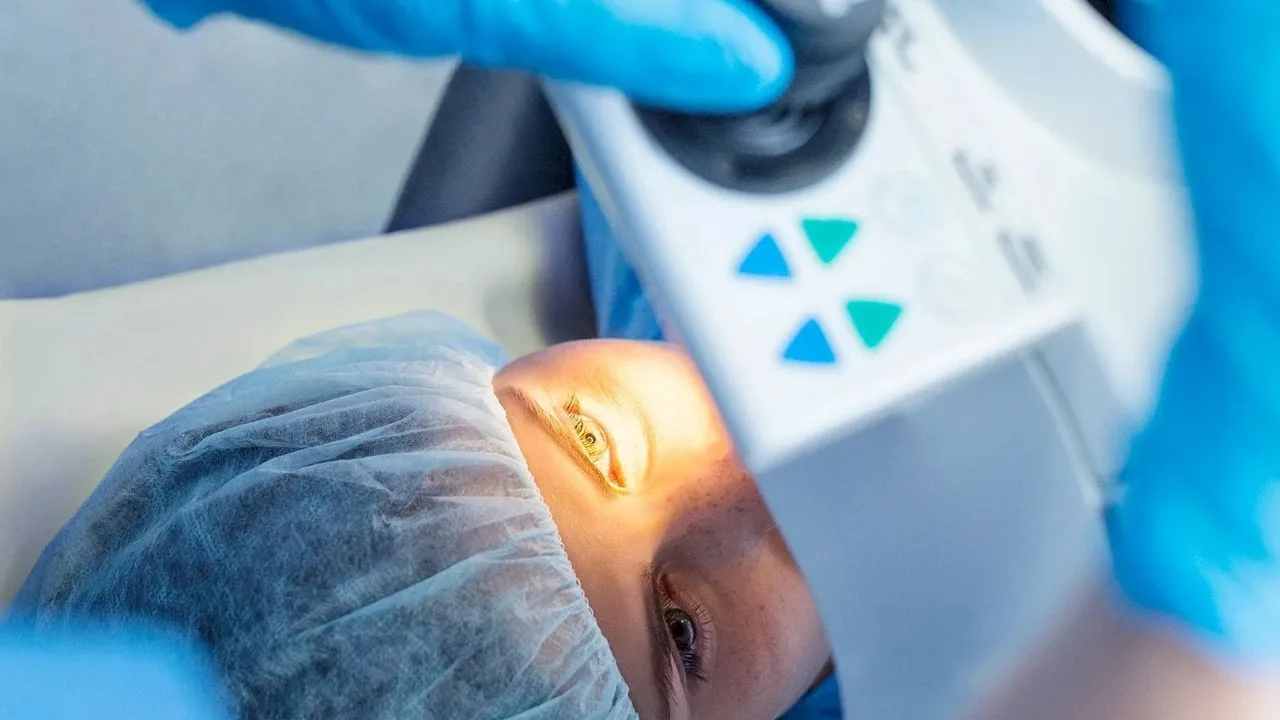
Depending on your prescription, the laser itself works for anywhere from a few seconds up to 20-30 seconds; the whole procedure takes a few minutes. iLASIK for both eyes takes 5-10 minutes. For a general comparison of the methods, see our article comparing laser eye surgery methods.
What Is the Difference Between a Femtosecond Laser and an Excimer Laser?
A femtosecond laser makes incisions in the cornea, while an excimer laser reshapes corneal tissue to correct your prescription. In iLASIK both lasers are used together; ReLEx SMILE Pro uses only the femtosecond laser, and PRK and No Touch (LASEK) use only the excimer laser.
| Femtosecond laser | Excimer laser | |
|---|---|---|
| Role | Makes incisions in the cornea (flap in iLASIK, tissue disc in SMILE) | Reshapes corneal tissue to correct the prescription |
| Used in | iLASIK, ReLEx SMILE Pro | iLASIK, PRK / No Touch (LASEK) |
| Example device at Kudret | IntraLase iFS 150 kHz (iLASIK), ZEISS VisuMax 800 (ReLEx SMILE Pro) | VISX STAR S4 IR Excimer |
Femtosecond Laser vs Microkeratome (Blade LASIK)
In conventional LASIK, the flap is cut with a blade called a microkeratome; in iLASIK, it is created with a femtosecond laser instead. The thickness of a femtosecond laser flap is generally more predictable than that of a microkeratome flap, and its edges can be smoother. The thickness, diameter and position of the flap are planned before surgery based on your eye measurements.
Which Femtosecond Laser Devices Does Kudret Eye İstanbul Use?
Kudret Eye İstanbul has the following femtosecond laser devices: ZEISS VisuMax 800, ZEISS VISUMAX 500, IntraLase iFS 150 kHz and FEMTO LDV Z8. ReLEx SMILE Pro is performed with the ZEISS VisuMax 800, and the iLASIK flap is created with the IntraLase iFS 150 kHz. The ZEISS VISUMAX 500 and FEMTO LDV Z8 can also be used for flaps and other corneal incisions. Your ophthalmologist decides which device to use based on the method and the structure of your eye.
Examination and imaging devices
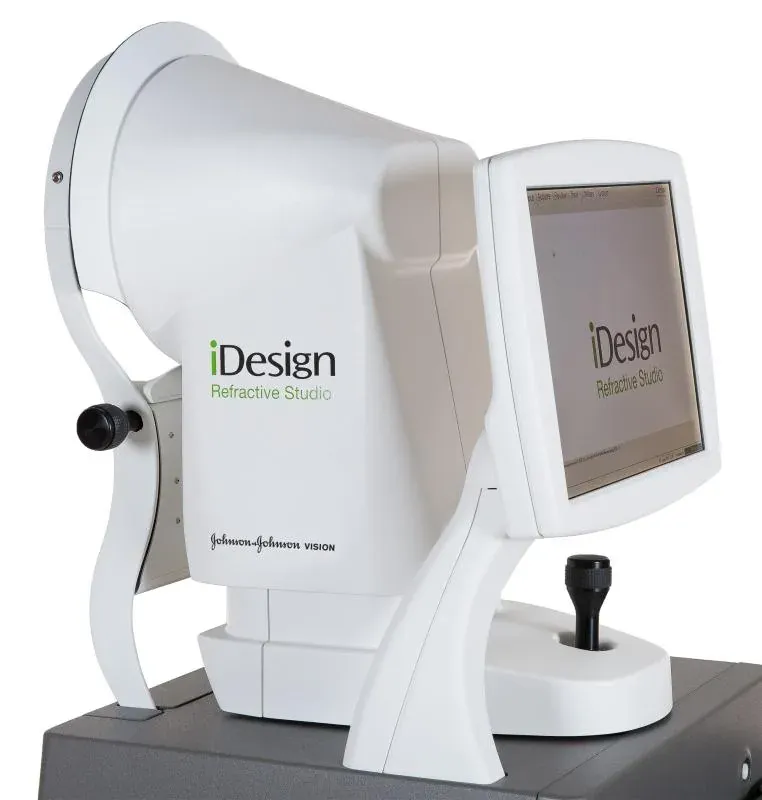
Johnson & Johnson Vision
iDesign Advanced WaveScan Studio
The measurement device that captures the eye’s optical “fingerprint”. In a single scan it records refractive error at over 1,200 points, corneal topography and pupil metrics. The map is passed to the excimer laser, so treatment follows your eye’s own map rather than a standard prescription.
Why we chose this device
A spectacle prescription is a coarse summary of the eye's refractive error; this device takes thousands of separate readings across the same eye and maps them. Laser treatment is then planned around that eye's own pattern rather than an average figure, which is where night vision is won or lost.
Tracey Technologies
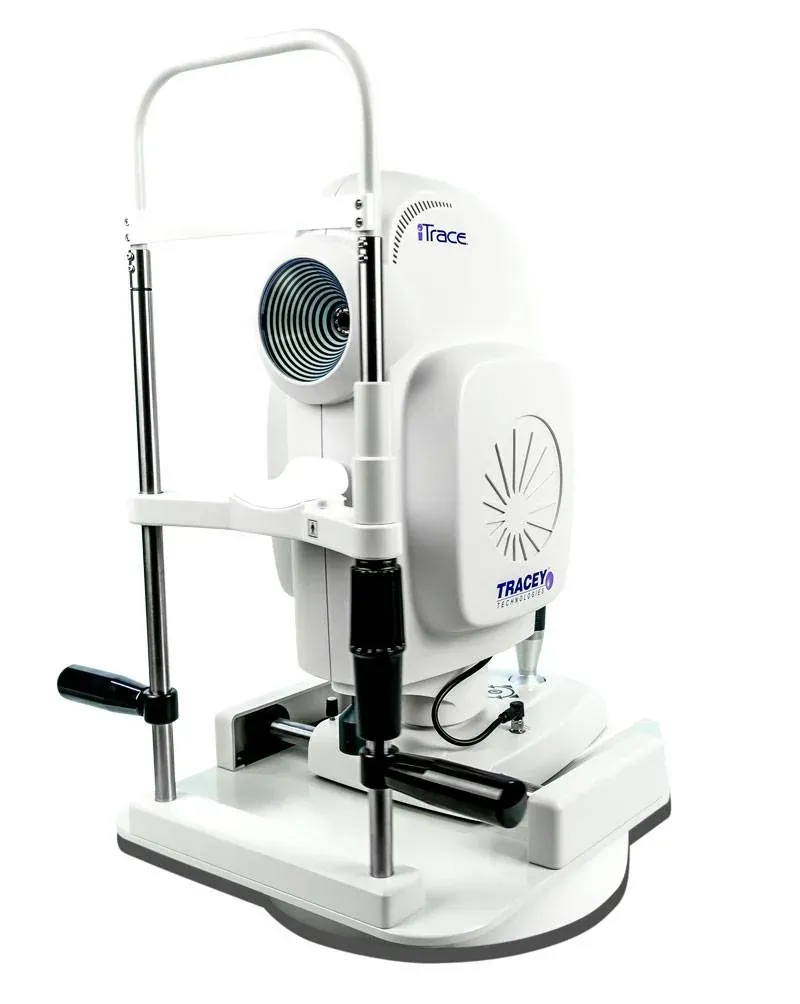
iTrace
A vision-quality analyser that splits the eye’s total refractive error into the parts coming from the cornea and from the natural lens. One of the measurements the surgeon relies on when deciding between laser and lens replacement, and when choosing a trifocal lens.
Why we chose this device
One of the methods that can tell whether a visual complaint comes from the cornea or from the lens inside the eye. That distinction changes the treatment: a corneal cause calls for laser, a lens cause for lens exchange. By ray-tracing the two separately, it keeps patients from being steered to the wrong procedure.
Laser systems
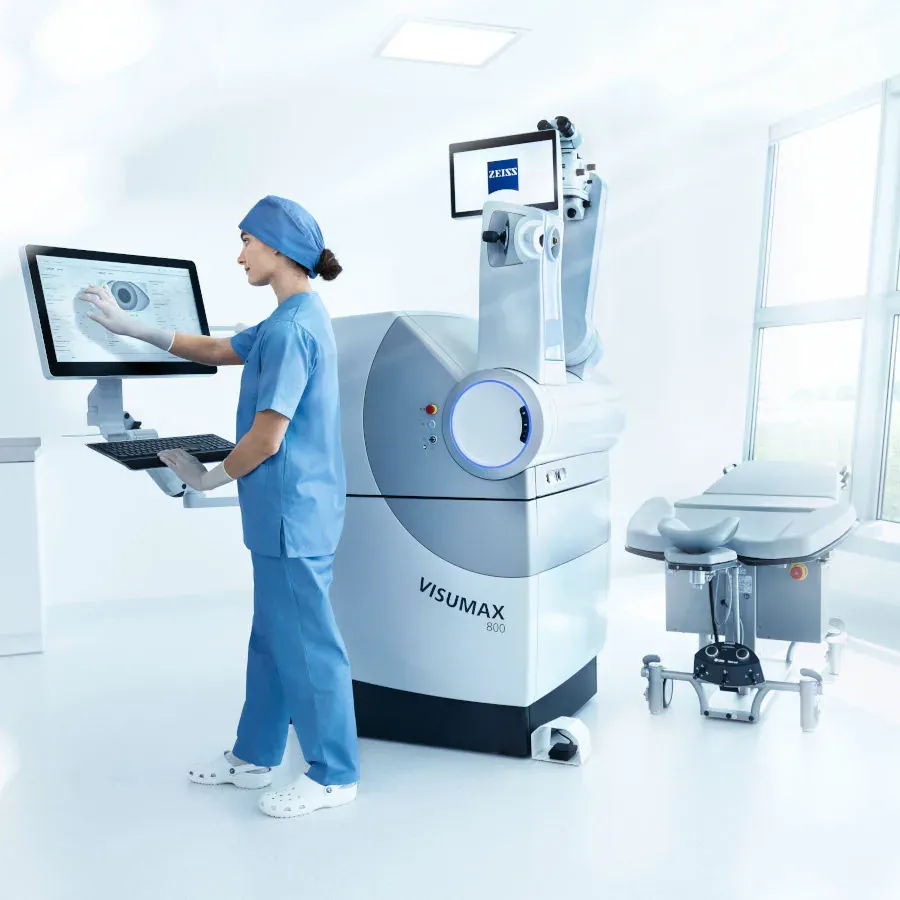
ZEISS VisuMax 800
The femtosecond laser behind ReLEx SMILE PRO. It creates a thin lenticule inside the cornea and removes it through a 2-4 mm incision; no flap is cut. Lenticule cutting takes under 10 seconds per eye and the device tracks eye movement to centre itself.
Why we chose this device
On this laser the lenticule cut in SMILE takes seconds; the shorter the eye has to be held still, the smaller the margin for error from patient movement. Its eye tracking keeps the cut on the planned axis even if the eye shifts.
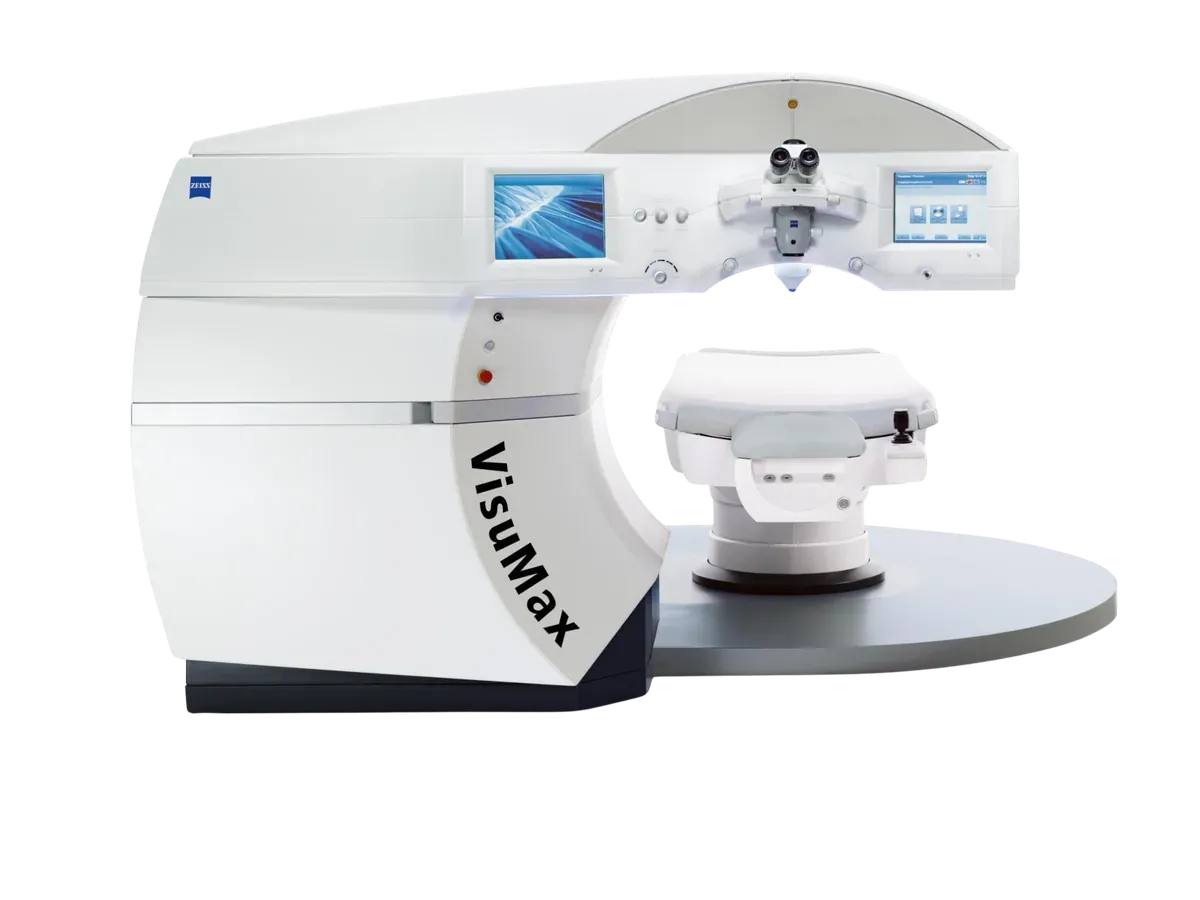
ZEISS VISUMAX 500
The femtosecond laser the ReLEx SMILE technique was developed on. It shapes a thin lens (lenticule) inside the cornea and removes it through a small incision, without raising a flap on the surface. A suction ring holds the eye with gentle contact, and the curved interface, matched to the eye's own curvature, spreads the pressure.
Why we chose this device
Most of the SMILE literature rests on results gathered on this platform, so the long-term data for the technique comes from this very device. Having it alongside the VISUMAX 800 means two femtosecond lasers: we can run two rooms on the same day, and a service visit does not push the surgery schedule.
Johnson & Johnson Vision
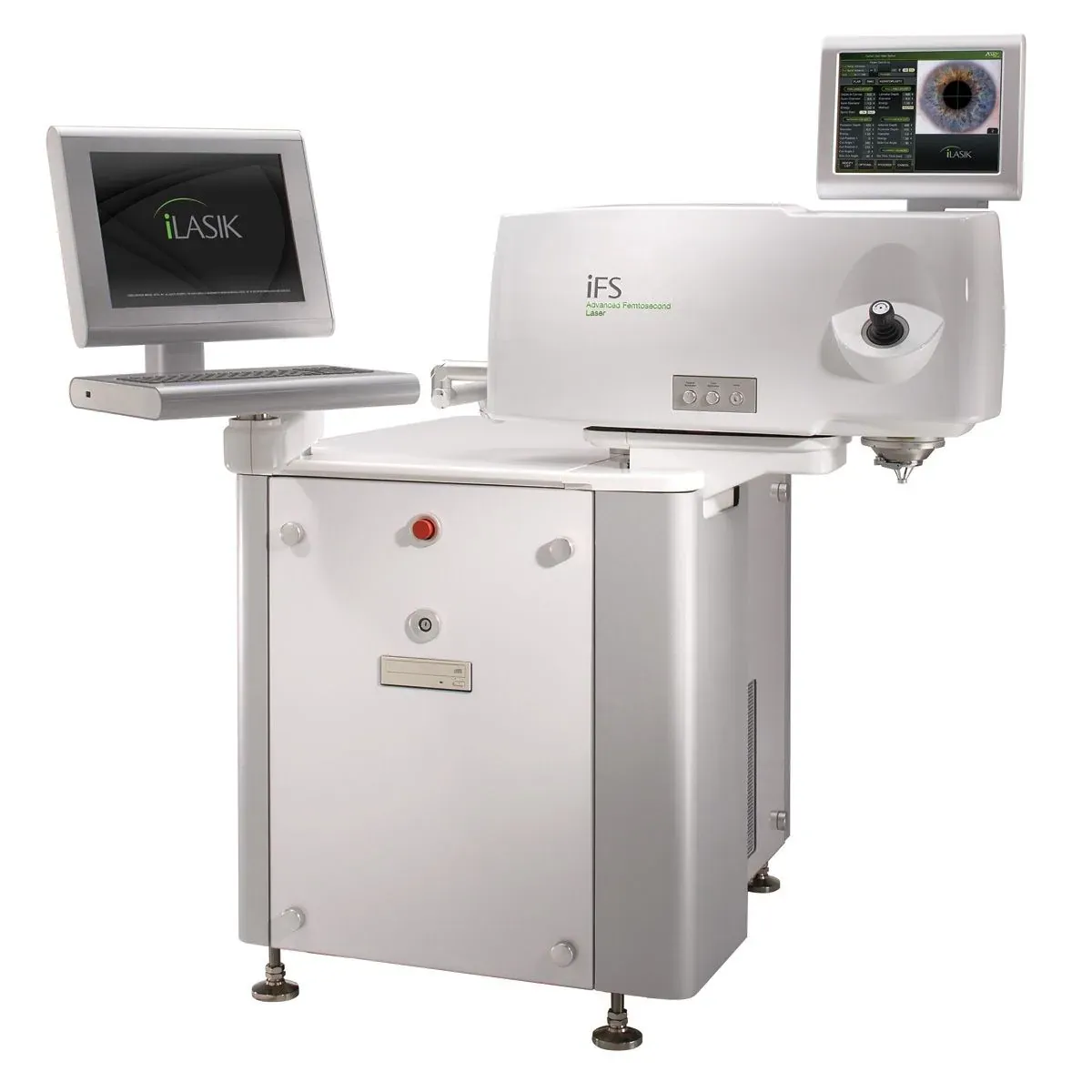
IntraLase iFS 150 kHz
The first step of iLASIK: the corneal flap is created 100 % blade-free with a femtosecond laser instead of a blade. At 150 kHz the flap forms in seconds, at the exact thickness and shape the surgeon sets, far more predictable than the older microkeratome. The device is the first link in the iLASIK platform developed by Abbott Medical Optics, today part of Johnson & Johnson Vision.
Why we chose this device
Creating the flap with a laser rather than a blade keeps its thickness uniform to the micron across the whole cornea. The 150 kHz speed shortens the step, and the bevelled edge lets the flap seat back more securely.
Ziemer
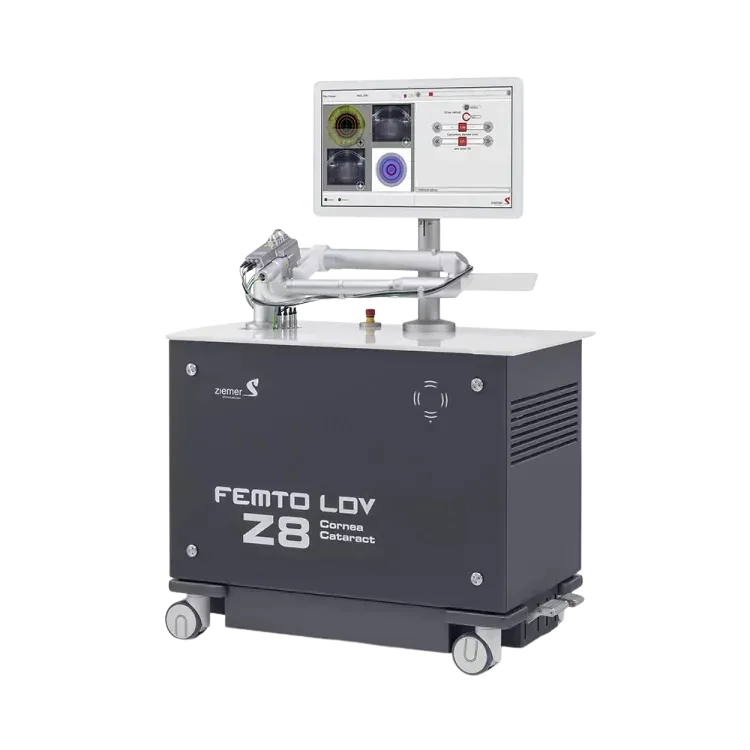
FEMTO LDV Z8
A mobile femtosecond laser usable in both corneal and cataract surgery. Its pulse energy is very low and its repetition rate very high, so cuts are formed from small overlapping spots. It can raise a flap, and in cataract surgery it opens the front capsule of the lens and fragments the lens itself. Being on wheels, the laser comes to the table rather than the patient being moved.
Why we chose this device
Opening the front capsule by hand is one of the steps in cataract surgery that most depends on the surgeon's experience; a laser-made capsulotomy comes out the same diameter and centred in every patient, which helps the intraocular lens sit where it should. That the device can be brought to the patient matters too: nobody is moved from one table to another mid-procedure.
Johnson & Johnson Vision
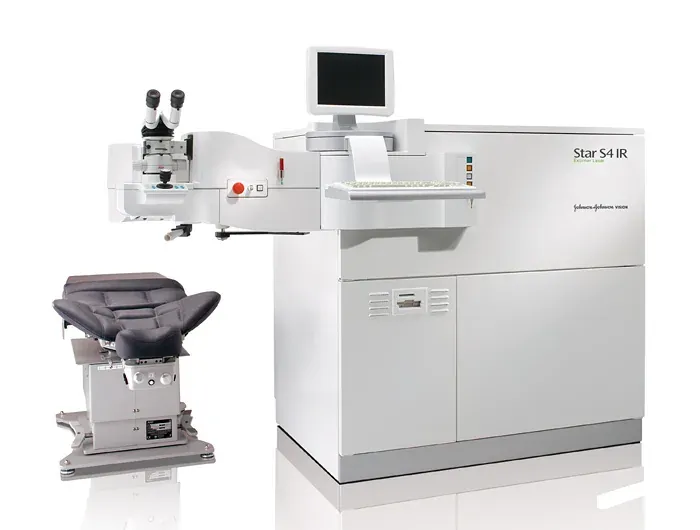
VISX STAR S4 IR Excimer
The excimer laser of iLASIK’s second step. It reshapes corneal tissue with micron precision; infrared eye tracking keeps every pulse on target even if the eye moves. Paired with iDesign measurements it delivers a fully personalised (wavefront-guided) treatment. This laser is part of the iLASIK platform developed by Abbott Medical Optics, today part of Johnson & Johnson Vision.
Why we chose this device
Infrared eye tracking measures the small involuntary movements of the eye hundreds of times a second and keeps the laser on the same spot. Its variable spot size removes only as much tissue as needed, and the less cornea spent now, the more margin remains for a later touch-up.
We keep renewing our equipment
Devices in eye care change quickly, and a newer system often means a shorter, more comfortable or more precise examination. We have renewed our equipment regularly since the day we opened, bringing new-generation systems into the clinic. This page is not fixed either: when a new device arrives, it is added here.
Who Is Femtosecond Laser Treatment Suitable For?
Laser treatment is performed from the age of 18; over the age of 45, lens options are also considered. Suitability is decided at your examination based on criteria such as corneal thickness, the structure of the cornea and whether your prescription has been stable for some time.
Suitability test
Which treatment suits me?
A few short questions to show you which treatments would be discussed at your examination. At the end we will call you for a free consultation.
Frequently Asked Questions
- 1
Is a femtosecond laser the same as LASIK?
No. A femtosecond laser is a type of device, while LASIK is a surgical method. In iLASIK, the flap is created with a femtosecond laser and the prescription is corrected with an excimer laser.
- 2
Is femtosecond laser surgery blade-free?
Yes, no blade is used for incisions made with a femtosecond laser. In iLASIK the flap is created with a femtosecond laser rather than a blade. In ReLEx SMILE Pro the incision is also made with a femtosecond laser, and no flap is created.
- 3
How long does femtosecond laser surgery take?
Depending on your prescription, the laser works for a few seconds up to 20-30 seconds; the whole procedure takes a few minutes. iLASIK for both eyes takes 5-10 minutes.
- 4
Does femtosecond laser surgery hurt?
Numbing drops are applied to the eye before the procedure, so most patients feel no pain during it. You may feel brief pressure on the eye during the laser, and your vision may go dark or blurry for a few seconds; this is normal. In the first hours afterwards, you may have some stinging and watering.
- 5
Who is femtosecond laser treatment suitable for?
Laser treatment is performed from the age of 18; over the age of 45, lens options are also considered. Suitability is decided at your examination based on criteria such as corneal thickness, the structure of the cornea and whether your prescription has been stable for some time.
- 6
Is a femtosecond laser also used in cataract surgery?
A femtosecond laser can be used for certain steps of cataract surgery, such as making the corneal incisions and opening the front capsule of the lens. Cataract surgery itself is most commonly performed using phacoemulsification. Your ophthalmologist will decide which technique is right for you after your examination.